
Bitcoin Enters Reset Period After Pullback from Highs: What the Consolidation Means
Bitcoin has entered what analysts are calling a “reset period” after plunging more than 48% from its October 2025 all-time high, with the cryptocurrency now consolidating near $66,400 as multiple phases of base-building take shape ahead of the next directional move.
The largest cryptocurrency by market cap peaked at approximately $127,000 in October 2025 before entering a sustained correction through Q1 2026. As of March 28, Bitcoin was down more than 23.7% year-to-date, trading near $66,400 with a market capitalization of $1.33 trillion on 24-hour volume of roughly $24.6 billion.
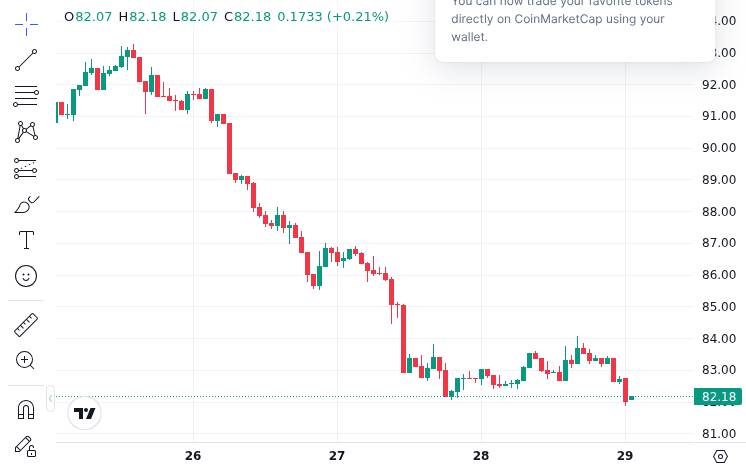
The drawdown dipped as low as approximately $60,000 earlier in Q1 before recovering to current levels. That scale of correction, roughly 48% peak-to-trough, is consistent with prior Bitcoin cycle pullbacks at similar macro stages, including the mid-cycle retracements of 2021 and the pre-halving consolidation in early 2024.
Sentiment reflects the severity of the decline. The Fear & Greed Index sits at 9 out of 100, deep in “Extreme Fear” territory. Broader risk markets are now catching up to the pain Bitcoin already absorbed: the S&P 500 has lost nearly 8% over the past month, suggesting traditional equities are only now reflecting the tighter financial conditions that crypto priced in months ago.
Why Analysts Call This a Reset, Not a Breakdown
Bitwise Senior Research Associate Luke Deans argues that Bitcoin’s compressed valuation actually signals reduced downside risk compared to stocks. The key indicator: the Mayer Multiple, which measures BTC’s spot price relative to its 200-day moving average, has sat in the lower percentiles of its historical range since January 2026.
“Bitcoin, a highly reflexive and liquidity-sensitive asset, typically responds earlier to shifts in risk appetite. This suggests that digital assets began reflecting tighter financial conditions ahead of many traditional risk assets. Relative valuation indicators further reinforce this dynamic.”
Luke Deans, Senior Research Associate at Bitwise
In practical terms, a “reset period” means the excess leverage has been purged, speculative positioning has unwound, and a new base is being built. The $441 million in crypto liquidations that recently swept through the market helped flush overleveraged long positions, a necessary precondition for sustainable price recovery.
The reset thesis draws on historical precedent. PANews, synthesizing the CoinDesk analysis, outlines a multi-stage recovery framework for 2026: first, a bottoming and deleveraging phase (likely already underway); second, a mid-term rebound as conditions stabilize; and third, a consolidation period before any sustainable uptrend can take hold.
Deans reinforced this view, noting that “assets that have undergone substantial valuation compression tend to exhibit reduced downside sensitivity as leverage and speculative positioning are progressively unwound. Alternatively, markets trading closer to cyclical highs often retain greater vulnerability to negative macro catalysts.”
This framing positions 2026 as a “transitional year” rather than a one-sided bull or bear market. Bitcoin dominance has tightened the broader crypto market structure, with altcoin correlations surging into what analysts describe as a single-factor, BTC-driven environment. The technical weakness visible in altcoins like XRP reflects this dynamic, where the entire market moves on Bitcoin’s rhythm.

Key Levels and Catalysts That Will Shape What Comes Next
The macro backdrop remains the dominant variable. Prediction markets including Polymarket and Kalshi now price in a near 40% chance of zero Federal Reserve rate cuts in 2026, up from less than 3% earlier in the year. The U.S.-Iran conflict and resulting surge in oil and gas prices have pushed inflation expectations higher, reducing the likelihood of the monetary easing that crypto markets had been counting on.
Despite the headwinds, institutional positioning tells a different story. U.S. spot Bitcoin ETF total assets under management stood at $95.93 billion as of March 26, up from $91.19 billion a month prior. That $4.7 billion increase during a period of extreme fear suggests long-term allocators are accumulating, not fleeing.
For the consolidation to resolve bullishly, Bitcoin needs to reclaim and hold above the $70,000 level, which would place it back above the 200-day moving average and push the Mayer Multiple out of its compressed range. A sustained move above $75,000 would confirm the second phase of the recovery framework, the mid-term rebound.
On the downside, a break below the Q1 low near $60,000 would invalidate the reset thesis and suggest a deeper correction toward the $50,000-$55,000 range. The ongoing fallout from high-profile collapses like Goliath Ventures underscores that contagion risks have not fully dissipated.
One metric readers can track: exchange reserves. Declining BTC balances on exchanges historically correlate with accumulation phases, as holders move coins to cold storage rather than positioning to sell. Rising reserves, conversely, signal potential distribution pressure ahead.
The concrete catalysts to watch include upcoming U.S. jobs data and CPI prints, which will shape Fed rate expectations directly. Options expiry dates in April could also trigger volatility. With Bitcoin’s valuation already compressed and traditional markets still adjusting to tighter conditions, the asymmetry may favor the asset that has already taken its hit.
Disclaimer: This article is for informational purposes only and does not constitute financial or investment advice. Cryptocurrency and digital asset markets carry significant risk. Always do your own research before making decisions.