
Ripple Treasury Brings XRP and RLUSD Into Corporate Finance
Ripple announced on April 1, 2026 that Digital Asset Accounts and Unified Treasury are now live inside Ripple Treasury, placing XRP and RLUSD balances alongside cash in a single corporate finance interface for the first time on the platform.
The update lets CFOs view, hold, receive, and manage fiat and digital liquidity from banks and custody providers in one system, eliminating the need for separate custody platforms and reconciliation workflows.
What to Know
Ripple Treasury’s April 1 expansion adds two features: Digital Asset Accounts and Unified Treasury. Together, they allow XRP and RLUSD balances to appear inside the same account structure as cash, with real-time valuation and automated transaction recording.
This is not the debut of Ripple Treasury as a platform. GTreasury’s January 27, 2026 launch post described Ripple Treasury as already operational for traditional cash and digital asset holdings. The April update extends that earlier rollout with dedicated digital asset account tooling.
Ripple has described the system as the first treasury management system with native digital asset capabilities. That claim remains company marketing; no independent product comparison or analyst note confirming the superlative was found in available sources.
Ripple Treasury Adds XRP and RLUSD to the Same Workflow as Cash
The core change is operational. Corporate treasury teams can now manage XRP, RLUSD, and fiat currencies from a single interface rather than toggling between banking portals, crypto custody tools, and manual reconciliation spreadsheets.
Ripple said the setup removes the need for additional infrastructure, counterparties, or tooling. Mark Johnson, VP of Global Product at Ripple Treasury, framed it in similar terms.
“By embedding digital asset functionality directly into existing treasury workflows, Ripple eliminates the need for additional infrastructure, counterparties, or tooling.”
Mark Johnson, VP Global Product, Ripple Treasury, via Decrypt
The product builds on Ripple’s 2025 acquisition of GTreasury, a treasury management platform that facilitated $13 trillion in payments volume in 2025. That acquisition gave Ripple an established enterprise client base to layer digital asset features onto.
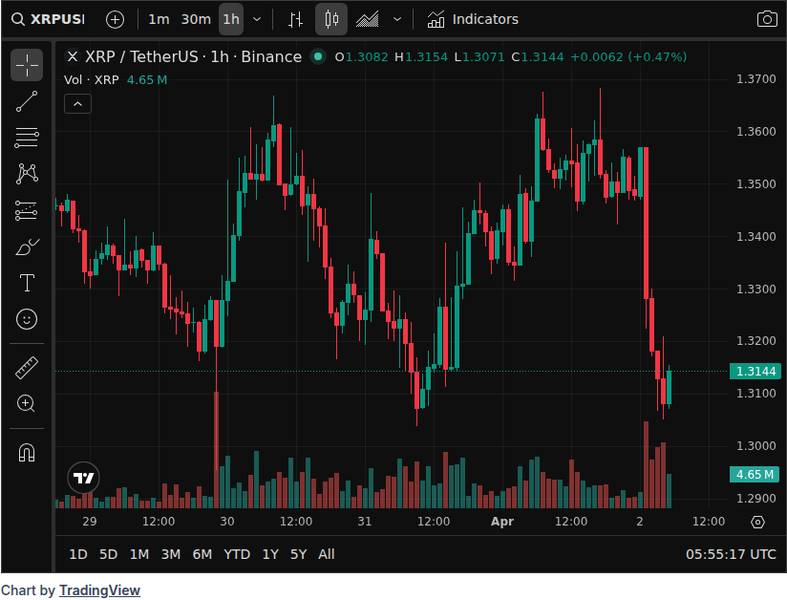
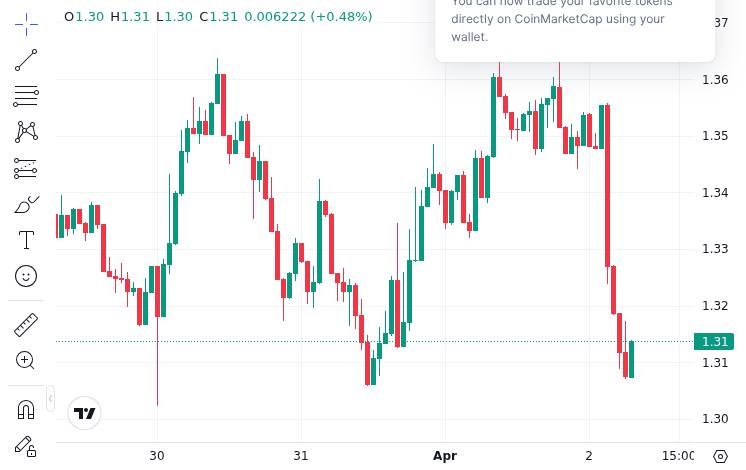
XRP traded at $1.31 at press time, with a market cap of roughly $80.67 billion and about $2.25 billion in 24-hour trading volume. The token was down approximately 2.16% over the prior 24 hours, though the price move appeared unrelated to the treasury product announcement. XRP has faced significant ETF-related outflow pressure in recent weeks, adding separate headwinds to the token’s performance.
Why RLUSD’s Policy Context and Ripple’s Marketing Claim Both Matter
RLUSD is a U.S. dollar-backed stablecoin issued under New York Department of Financial Services supervision. That regulatory framework carries specific obligations: NYDFS guidance requires prior written approval, full reserve backing, redemption at par value, segregated reserve custody, and public monthly CPA attestations.
Those standards matter for enterprise treasury teams evaluating whether to hold RLUSD alongside cash. Reserve quality and guaranteed par redemption are baseline requirements for any asset a CFO treats as a cash equivalent. The NYDFS framework provides a regulatory floor that generic crypto tokens do not have.
The distinction between the product’s significance and Ripple’s marketing framing is worth separating. Embedding digital assets into a working treasury management system is a concrete product development. Calling it the first of its kind is a competitive claim that no independent source has verified.
Decrypt separately confirmed the launch details and reported that the system supports XRP and RLUSD alongside traditional currencies inside one interface for corporate treasury teams, consistent with Ripple’s own description.
What This Could Mean for Corporate Treasury Adoption
Ripple cited survey data showing 72% of more than 1,000 finance leaders said they need a digital asset solution. The company also pointed to $33 trillion in stablecoin volume during 2025 as evidence of growing institutional demand for digital asset infrastructure.
Those figures suggest appetite, but customer traction for the specific Digital Asset Accounts and Unified Treasury features remains less clear. The research brief found no named beta customers or implementation case studies tied to the April launch. That gap matters: product announcements and actual enterprise adoption are different milestones.
The broader trend toward unified treasury systems for fiat and digital assets is real. As stablecoin volumes grow and regulatory frameworks like the NYDFS stablecoin guidance mature, corporate finance teams face increasing pressure to manage digital assets with the same rigor they apply to cash. The security landscape across DeFi, including incidents like the Drift Protocol exploit on Solana and subsequent unusual activity warnings, underscores why institutional-grade infrastructure and custody controls matter for enterprise adoption.
What remains to watch: whether Ripple can demonstrate real customer adoption, whether the “first TMS” claim holds up as competitors respond, and whether policy clarity around stablecoins accelerates or slows enterprise treasury teams from moving digital assets onto their balance sheets.
Disclaimer: This article is for informational purposes only and does not constitute financial or investment advice. Cryptocurrency and digital asset markets carry significant risk. Always do your own research before making decisions.