XRP Debate Returns as David Schwartz Clarifies Value Dynamics
Ripple CTO David Schwartz clarified on April 2, 2026, that his widely cited “XRP cannot be cheap” remark was about payments utility, not a promise of price appreciation for holders. The distinction reignited a long-running debate over XRP’s role alongside stablecoins in institutional payment corridors.
What David Schwartz Actually Clarified About XRP
Schwartz addressed the misinterpretation directly in an X post on April 2, 2026. He wrote that the “XRP cannot be cheap” line was being read from the perspective of an XRP holder, when it was actually meant from the perspective of using XRP for payments.
You're thinking about it from the point of view of an XRP holder. When I said "XRP cannot be cheap" if you're talking about this post, that was talking about it from the point of view of using it for payments.https://t.co/Vkk1C9b7jh
— David 'JoelKatz' Schwartz (@JoelKatz) April 2, 2026
Source: @JoelKatz on X
The payments-utility framing matters because it shifts the argument entirely. A higher XRP price, in Schwartz’s logic, reflects the network’s capacity to settle larger payment volumes without requiring massive token quantities per transaction.
This is not a new position from Schwartz, but the clarification was notable because the original remark had been repeatedly cited in XRP community discussions as a bullish price signal. Schwartz’s correction reframed it as an infrastructure argument, not a speculative one.
Why the XRP Versus Stablecoin Debate Resurfaced
The clarification came alongside a broader thread from Schwartz defending XRP’s relevance against stablecoins. In a series of April 2 posts, he acknowledged that some use cases favor stablecoins or regulated assets, but argued that cryptocurrencies retain three major advantages over stablecoins.
Schwartz also pushed back on a specific objection tied to Ripple’s XRP holdings. He mocked the idea that a firm would reject a system that makes business sense simply because it could also make another company money. That argument has been a recurring friction point in discussions about XRP’s positioning relative to competitors.
CCN independently reported on April 3, 2026, that Schwartz’s comments defended XRP’s relevance against stablecoins and argued banks could still prefer XRP in certain payment scenarios.
It is worth noting that the research behind this story did not find direct institutional statements questioning XRP’s value dynamics. The “institutional skepticism” framing that appeared in some coverage appears to be commentary layered on top of Schwartz’s clarification, not sourced from any named bank or payment firm. No corporate due-diligence document or official institutional statement was cited in the available evidence.
The broader competitive backdrop is relevant. Stablecoins continue to gain traction for their price stability and, in some jurisdictions, clearer regulatory treatment. Schwartz’s thread was a direct response to that dynamic, positioning XRP’s utility advantages against stablecoin convenience, a debate that also plays out as traditional brokerages like Schwab move toward spot crypto trading.
Current XRP Market Context
XRP traded at $1.3174 at press time, down 0.155% over the prior 24 hours. The modest decline suggests the debate itself has not triggered significant selling pressure.
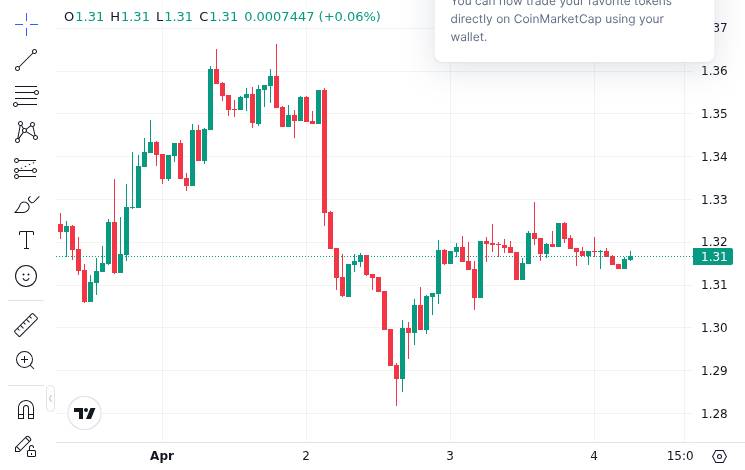
XRP held a market capitalization of roughly $80.89 billion, ranking it the No. 4 crypto asset. Twenty-four-hour trading volume stood at $1.11 billion, with 61.41 billion XRP in circulating supply.
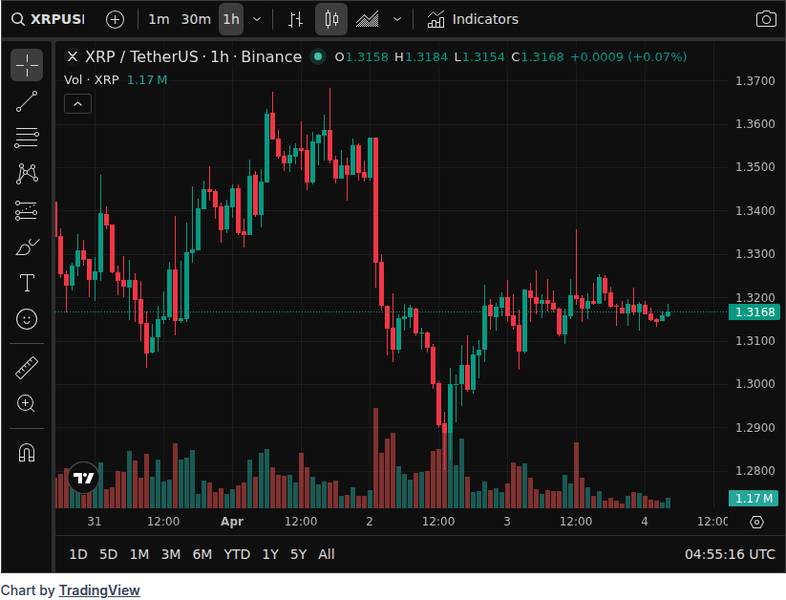
The price action is secondary to the story here. Schwartz’s clarification was about how XRP’s price relates to its function as a settlement layer, not about short-term market moves. For holders watching XRP’s technical setup alongside altcoins like SHIB, the distinction between utility valuation and speculative valuation is the core takeaway.
The stablecoin-versus-crypto debate is unlikely to resolve soon, but Schwartz’s April 2 thread offers a clear record of how Ripple’s CTO frames the trade-off. Any future institutional adoption discussion around XRP will likely reference this clarification as a baseline, though whether institutions themselves engage with the argument remains unconfirmed by any public statement.
Disclaimer: This article is for informational purposes only and does not constitute financial or investment advice. Cryptocurrency and digital asset markets carry significant risk. Always do your own research before making decisions.