
Trump Jobs Report Update vs. Bitcoin’s Worst Retail Participation
The U.S. economy added 178,000 jobs in March 2026, giving President Trump fresh ammunition for his economic narrative, but Bitcoin’s retail participation has simultaneously fallen to its lowest level in nine years, exposing a widening gap between macro optimism and crypto market conviction.
What Trump’s Jobs Report Update Changes in the Bitcoin Narrative
The Bureau of Labor Statistics reported that total nonfarm payroll employment rose by 178,000 in March, with the unemployment rate holding at 4.2%. Trump framed the numbers as evidence of economic strength, though one source described his post as claiming the trade deficit was down 52%, a figure that could not be independently verified from its original source.
The headline number masked a sharp downward revision underneath. February payroll growth was revised from 151,000 down to just 18,000, a cut of 133,000 jobs. That revision suggests the labor market was considerably weaker heading into March than initially reported.
Crypto commentator Lark Davis called Trump’s framing “half-truth, half-spin,” noting the March gains were concentrated in healthcare and construction rather than reflecting broad-based strength. Manufacturing, in particular, did not show meaningful recovery.
Trump’s post is half-truth, half-spin.
Yes, March jobs were a rebound: about 178K added overall, and private payrolls were roughly 186K.
But that’s not a broad-based boom. The gains were mostly in health care and construction, while manufacturing didn’t exactly roar back.… pic.twitter.com/zSsyQG8gsg
— Lark Davis (@LarkDavis) April 4, 2026
Source: @LarkDavis on X
Employment data matters to Bitcoin because it shapes expectations around Federal Reserve policy and risk appetite. A strong jobs print can support risk-on positioning, but revisions like February’s complicate that read, leaving traders uncertain about whether the labor market is genuinely improving or merely volatile.
Why Bitcoin Retail Participation Is at Its Weakest in 9 Years
On the other side of this equation, retail investors have largely disappeared from Bitcoin markets. On-chain analyst Darkfost reported that retail activity, measured by Binance inflows below 1 BTC, hit a nine-year low. Binance remains the most widely used exchange among smaller participants, making it a reliable proxy for retail engagement.
💥 Retail activity hit an 9-year low.
Retail activity has reached a record low.
Retail investors are clearly absent from the market.— 💡In this chart, retail activity is represented by inflows below 1 BTC on Binance.
Binance remains the most widely used platform among this… pic.twitter.com/IS0tuCi2uD— Darkfost (@Darkfost_Coc) April 3, 2026
Source: @Darkfost_Coc on X
ForkLog confirmed the scale of the decline, reporting the 30-day moving average of small Bitcoin inflows to Binance fell to 332 BTC, the lowest since Binance launched in 2017. That figure represents the aggregate of all deposits under 1 BTC, meaning the everyday buyer has effectively stepped away.
The retreat is not limited to on-chain data. A Finimize survey of 2,660 retail investors published by Traders Magazine found that planned crypto allocations fell to 21% in March, down from 29.5% the previous quarter. Retail capital is rotating toward ETFs and commodities instead, a trend that investors weighing what crypto to buy now should factor into their timing.
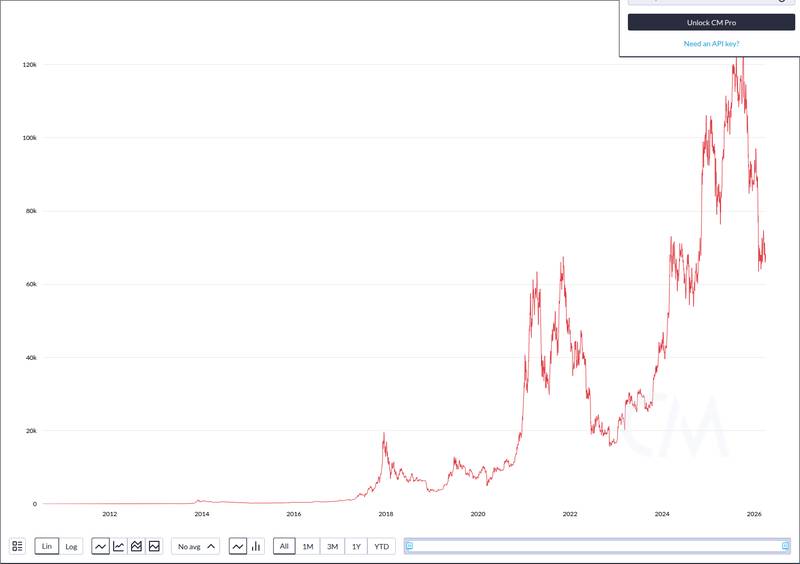
Bitcoin traded at $67,103 at press time, with a roughly $1.34 trillion market cap and about $22.04 billion in 24-hour volume. The Fear & Greed Index sat at 11, deep in “Extreme Fear” territory, reinforcing the sentiment disconnect.
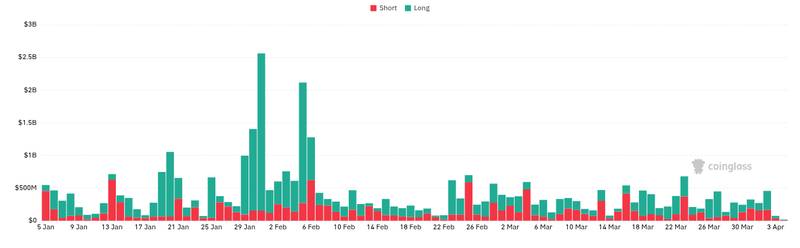
A nine-year low in retail participation matters because retail flows historically confirm or deny rallies. Institutional accumulation can push price higher, but sustained moves typically require retail follow-through. Without it, rallies risk stalling, as Solana and other altcoins have also shown with mixed signals near key levels.
What the Macro-Crypto Divergence Signals for Sentiment
The core tension is straightforward: the jobs report gives macro bulls a data point to cite, but Bitcoin’s own participants are not showing up. The 332 BTC retail inflow average and the drop from 29.5% to 21% in planned crypto allocations tell the same story from two different angles.
This divergence does not necessarily mean a bullish macro read is wrong for Bitcoin. It may simply mean the transmission mechanism is delayed. Retail investors tend to re-enter crypto markets after sustained price recovery, not before it. If institutional interest or new utility developments, like Ripple’s recent treasury management launch, continue building infrastructure, retail could follow once sentiment shifts.
What the data supports right now: the labor market is sending mixed signals (strong March headline, historically weak February revision), and Bitcoin’s retail base is at its thinnest point since 2017. The Fear & Greed reading of 11 confirms that the broader crypto market is pricing in caution, not optimism.
For traders watching this space, the February payroll revision from 151,000 down to 18,000 may prove more consequential than the March headline. If future revisions continue to erode reported job gains, the macro narrative Trump is promoting could weaken, removing one of the few remaining supports for risk-asset sentiment at a time when retail has already left the building.
Disclaimer: This article is for informational purposes only and does not constitute financial or investment advice. Cryptocurrency and digital asset markets carry significant risk. Always do your own research before making decisions.