
Spot Bitcoin ETFs Record $471 Million Inflows as BTC Holds Amid Volatility
U.S. spot Bitcoin ETFs pulled in $471 million in net inflows on April 6, 2026, marking the largest single-day haul in over six weeks and signaling a sharp reversal in institutional sentiment as Bitcoin held firm through a volatile stretch.
BlackRock and Fidelity Drive the Bulk of $471 Million in ETF Inflows
BlackRock’s iShares Bitcoin Trust (IBIT) led the charge with approximately $182 million in net inflows, reinforcing its dominant position in the spot Bitcoin ETF market. Fidelity’s FBTC followed with roughly $147 million, bringing the combined total from the two largest funds to about $329 million.
ARK Invest and 21Shares’ ARKB posted its strongest single day in months, contributing approximately $119 million. All 12 spot Bitcoin ETFs recorded either zero or positive flows on the day, with no fund registering outflows, a rare occurrence that points to broad-based institutional buying pressure.
The $471 million inflow day stands in stark contrast to the first two months of 2026. January and February saw roughly $1.8 billion in net outflows driven by Federal Reserve policy concerns, before March reversed the trend with $1.3 billion flowing back into the products.
Institutional Conviction Grows While Retail Sentiment Hits Rock Bottom
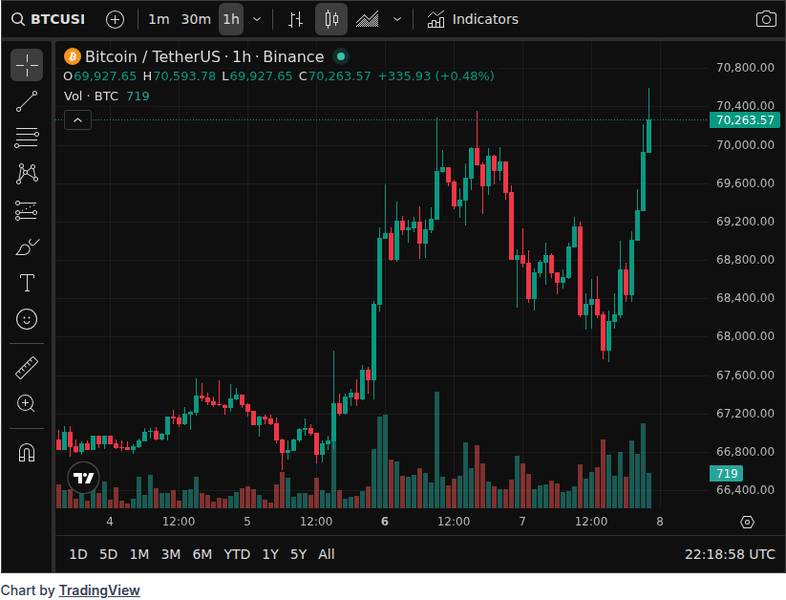
Bitcoin was trading at $68,714 at the time of the inflows, subsequently climbing to $70,229, up roughly 1% in 24 hours. The buying occurred while the Fear and Greed Index sat at just 11, deep in “Extreme Fear” territory.
That disconnect matters. Inflows during a rally can simply reflect momentum chasing. Inflows during extreme fear, with Bitcoin trading near institutional cost bases, suggest conviction buying. Glassnode on-chain data shows BlackRock’s IBIT investors hold an average cost basis of $69,200, while Fidelity’s FBTC holders average $57,400, meaning both cohorts are buying near or slightly below their break-even levels.
Binance Research noted that Bitcoin may have evolved from a macro “lagging receiver” to a “leading pricer,” with ETF-driven institutional flows now forward-looking, positioning ahead of expected policy moves rather than reacting after the fact.
U.S. spot Bitcoin ETFs now collectively hold approximately $90 billion in total assets. IBIT commands nearly 60% of the market at $54.5 billion, a concentration that underscores how institutional whale positioning increasingly shapes Bitcoin’s price discovery.

ETF Flows as a Supply-Demand Signal: What to Watch Next
The structural significance of these inflows becomes clearer when measured against Bitcoin’s post-halving issuance rate of approximately 450 BTC per day. On April 6, ETF inflows alone absorbed multiples of daily new supply, creating a demand imbalance that tightens available float over time.
Prediction markets currently price a 98% probability that the Federal Reserve will hold rates steady at its April meeting. Market analysts at Crypto Briefing warned that “the trend could shift rapidly if inflation surprises to the upside,” with attention focused on upcoming CPI and PCE reports.
Consecutive days of inflows at this scale would reinforce the thesis that institutional demand is establishing a durable price floor near the $68,000-$70,000 range. A return to outflows, conversely, would suggest the April 6 surge was a one-off rebalancing event rather than a trend shift.
Investors tracking broader crypto market dynamics can monitor daily ETF flow data through platforms like CoinGlass, which provides fund-by-fund breakdowns and historical context. With Bitcoin’s market cap sitting at $1.405 trillion and institutional products controlling $90 billion of that exposure, ETF flow data has become one of the most actionable real-time indicators of market direction.
Disclaimer: This article is for informational purposes only and does not constitute financial or investment advice. Cryptocurrency and digital asset markets carry significant risk. Always do your own research before making decisions.