
Will Bitcoin Skyrocket When Iran War Ends? Key Signals
Bitcoin surged past $72,000 on April 8, 2026, after a two-week US-Iran ceasefire took effect, halting 40 days of military strikes and triggering a 5% rally to a three-week high. But with the Crypto Fear and Greed Index stuck at 17, deep in “Extreme Fear” territory, the market is signaling that this ceasefire bounce may not hold.
The ceasefire, brokered by Pakistan, paused US-Israeli attacks on Iran and restored safe passage through the Strait of Hormuz, which handles roughly one-fifth of global oil and gas supplies. Negotiations are scheduled to begin April 10 in Islamabad, but major sticking points remain: sanctions relief, frozen assets, and Lebanon’s inclusion are all disputed.
Bitcoin hit $72,841 in the hours after the announcement. At press time, it traded at $71,557 with a $1.43 trillion market cap and $51.15 billion in 24-hour volume.
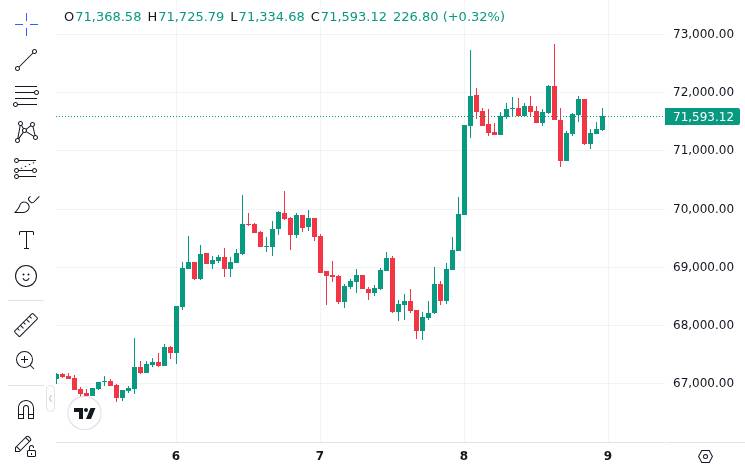
The rally followed a brutal stretch. When the US-Iran conflict escalated, Bitcoin dropped to roughly $63,000 before recovering to $69,000, a swing of more than 15%. Short sellers were punished on the reversal: between $427 million and $600 million in leveraged crypto futures were liquidated, primarily from bearish positions.
Why an End to Conflict Could Shift Bitcoin Risk Appetite
Geopolitical de-escalation typically triggers a rotation out of safe-haven assets and into risk-on positions. Oil prices tumbled more than 10% on the ceasefire news, with WTI crude falling to approximately $95 per barrel. That drop feeds directly into lower inflation expectations, which in turn raises the probability of rate cuts, weakens the dollar, and lifts liquidity-sensitive assets like Bitcoin.
Bitcoin is currently tracking gold at a 60% correlation, suggesting it is behaving more as a macro hedge than a speculative growth asset during this crisis. That shift matters: if peace holds, Bitcoin could decouple from gold and re-engage with risk appetite, potentially accelerating gains. Similar dynamics played out in broader markets when the CLARITY Act stablecoin debate influenced rate expectations earlier this year.
But conflict resolution does not automatically guarantee a sustained rally. Bitcoin remains 43.25% below its October 2025 all-time high of $126,080. Standard Chartered analysts have already cut their year-end price forecast to $100,000 from $150,000, citing ongoing geopolitical risk.
WHAT TO KNOW
- Base case: A successful ceasefire extension and sanctions relief could push Bitcoin toward $80,000-$100,000 as risk appetite returns and dollar weakens on rate-cut expectations.
- Risk case: Negotiations collapse after April 22, conflict resumes, oil spikes again, and Bitcoin retests the $63,000 lows or lower.
Oil, Inflation, and Fed Expectations: The Real Transmission Path
The ceasefire’s impact on Bitcoin runs through a clear macro chain. Iran’s agreement to restore Strait of Hormuz passage removed a major supply bottleneck. The 10% oil price drop translates to lower energy costs, reduced headline inflation, and a more dovish Federal Reserve outlook.
Lower real yields and a weaker dollar have historically been the most reliable tailwinds for Bitcoin. If oil stays below $100 and the Fed signals rate cuts at its next meeting, BTC could benefit from the same liquidity surge that powered its run to $126,080 in late 2025. Markets that rely on Fed policy shifts to drive crypto valuations are watching this chain closely.
The scenario where Bitcoin underperforms despite peace headlines is straightforward. If the ceasefire holds but sanctions remain, Iran’s 10-point proposal stalls, and the Fed stays hawkish on sticky core inflation, the initial relief rally fades. Traders who bought the ceasefire news would face a classic “buy the rumor, sell the fact” setup.
Strategy, the Michael Saylor-led firm, bought the dip aggressively. The company acquired 4,871 BTC for $329.9 million at an average price of $67,718 during the conflict period, bringing total holdings to 766,970 BTC. That institutional conviction contrasts sharply with the Fear and Greed Index reading of 17, which reflects retail and derivatives market anxiety.
What Traders Should Watch Before Calling a Breakout
The gap between Bitcoin’s price action (bullish) and market sentiment (extreme fear) is the defining signal right now. A durable breakout requires more than a headline-driven spike. Here is what to monitor in the two-week negotiation window.
Exchange reserves are a key indicator. Declining reserves signal that holders are moving Bitcoin to cold storage, reducing sell pressure. Rising reserves suggest traders are positioning to sell into strength. On-chain flow data from CryptoQuant provides real-time visibility into these movements.

Derivatives positioning matters equally. Elevated funding rates and surging open interest after a sharp move up often precede a correction. If funding rates stay neutral or negative while price holds above $70,000, that is a healthier foundation than a leverage-fueled spike.
Stablecoin liquidity is the fuel gauge. Rising USDT and USDC market caps and increasing stablecoin deposits on exchanges indicate fresh capital entering crypto. Without new liquidity, the rally depends entirely on existing holders rotating, which limits upside. Developments in DeFi infrastructure that improve capital efficiency could amplify this effect.
PRE-BREAKOUT CHECKLIST
- Exchange reserves: Declining = bullish (holders withdrawing). Rising = bearish (preparing to sell).
- Funding rates: Neutral or slightly negative = healthy. Spiking positive = overleveraged longs at risk.
- Stablecoin inflows: Growing exchange deposits = fresh buying power entering the market.
- Spot ETF flows: Sustained net inflows signal institutional conviction beyond the headline trade.
- April 10 negotiations: Any breakdown in Islamabad talks could reverse the entire ceasefire rally within hours.
According to unconfirmed reports, Iran has proposed accepting Bitcoin payments as transit tolls for ships passing through the Strait of Hormuz. If verified, that would represent an unprecedented case of sovereign cryptocurrency adoption for critical trade infrastructure, potentially adding a structural demand driver for BTC beyond speculation.
This is a two-week ceasefire, not a peace deal. The April 10-22 negotiation window will determine whether Bitcoin’s surge becomes a sustained recovery or another failed breakout in a war-suppressed market. Geopolitical outcomes are inherently uncertain, and markets can reprice within minutes of a headline.
Disclaimer: This article is for informational purposes only and does not constitute financial or investment advice. Cryptocurrency and digital asset markets carry significant risk. Always do your own research before making decisions.