
When Will the Bitcoin Bull Run Start? Analyst Markers to Watch
Bitcoin trades at $71,010 after falling 43.6% from its October 2025 all-time high of $126,080, and crypto analyst CrypFlow has laid out three specific technical markers that must align before the next bull run can be confirmed.
The question dominating crypto markets is not whether Bitcoin will recover, but when. CrypFlow’s framework offers a structured answer, replacing speculation with a checklist of measurable conditions rooted in past cycle behavior.
Three Technical Markers That Must Break Before a Bull Cycle Begins
CrypFlow identifies three conditions that must be met before treating any rally as the start of a sustained bull phase. Bitcoin must break above the descending trendline drawn from its cycle peak, reclaim the -14 level on the wave trend indicator, and move back above the 50-week Simple Moving Average.
Each marker targets a different dimension of trend confirmation. The descending trendline measures whether selling pressure from the peak has been absorbed. The wave trend indicator at -14 has historically separated bearish from bullish environments across multiple Bitcoin cycles. The 50-week SMA acts as a macro filter, distinguishing corrections within uptrends from full bear markets.
Bitcoin has been trading below its 50-week SMA for nine consecutive weeks as of January 2026. Historical precedent shows that prolonged periods beneath this level preceded major pullbacks of 50% to 70%.
WHAT TO KNOW
- Three markers, not one: A single breakout above a trendline is insufficient. CrypFlow requires all three conditions, trendline break, wave trend reclaim, and 50-week SMA recovery, to confirm a new bull cycle.
- Timeline estimate: Based on Stochastic RSI cycle analysis, the analyst targets October 2026 as a potential launchpad, roughly six months from now.
The October 2026 timeline rests on a comparison of Stochastic RSI behavior across cycles. In previous bear markets, the Stochastic RSI spent approximately 365 days below zero before a sustained reversal. In the current cycle, it has spent only around 120 days below zero, suggesting the bottoming process may be less than halfway complete.
As CrypFlow put it, “the bottom is simply where price stops falling, but that does not mean the broader trend has reversed.” The distinction matters for anyone watching for signals that Bitcoin could skyrocket on geopolitical or macro catalysts alone.
What Separates a Short Rally From a Confirmed Trend Reversal
Bitcoin’s current price near $70,000 sits at a technically significant zone. An ascending trendline connecting the 2018 and 2022 cycle bottoms intersects with previous resistance from the 2021 peak around $69,000. This confluence suggests a potential support base, but support alone does not equal reversal.
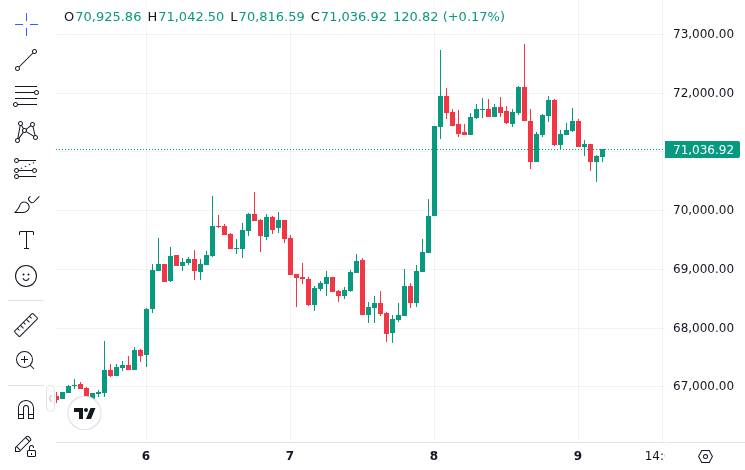
CrypFlow emphasized that “the current price action hasn’t completed the slow, grinding work that true cycle bottoms are built on.” Failed breakouts have trapped buyers in every previous cycle. The 2019 rally to $14,000 and the early 2022 bounce to $48,000 both occurred before the real bottom was set.
The Fear & Greed Index sits at 14, deep in Extreme Fear territory. While contrarian traders treat extreme fear as a buying signal, the indicator alone has a poor track record for timing. In 2022, the index spent months below 20 before Bitcoin fell another 40%.
Confirmation requires volume expansion and broader market participation. A rally on thin volume, even one that briefly reclaims the 50-week SMA, is more likely a bear market trap than a trend reversal. The three-marker framework accounts for this by requiring simultaneous confirmation across different technical dimensions.
The invalidation scenario is straightforward. If Bitcoin breaks below the ascending trendline from previous cycle lows, currently near $65,000, the bottoming thesis weakens significantly. A sustained move below that level would suggest the correction has further to run, potentially toward the 50% to 70% drawdown range that previous cycles below the 50-week SMA produced.
A Weekly Checklist for Tracking the Setup
CrypFlow’s framework translates into a simple monitoring routine. Each week, check whether Bitcoin has closed above the 50-week SMA on the weekly chart. Check whether the wave trend oscillator has crossed above -14. Check whether the descending trendline from the October 2025 high has been broken with a weekly close above it.
Until all three conditions are met, rallies are best treated as bear market bounces rather than the start of a new cycle. This applies even when sentiment shifts, as external disruptions like platform crackdowns on crypto content can amplify short-term volatility without changing the underlying trend structure.
Risk management in this environment means sizing positions for the possibility that the bottoming process extends through late 2026. With Bitcoin’s market cap at $1.42 trillion and daily volume at $40.58 billion, liquidity remains deep enough for orderly exits, but that changes quickly during capitulation events.
The trigger-based approach CrypFlow outlines removes the need to predict exact timing. Rather than guessing whether macro catalysts like Fed policy shifts will spark a rally, the framework waits for the market itself to confirm the turn. October 2026 is an estimate, not a deadline. The markers will either confirm or they won’t.
Disclaimer: This article is for informational purposes only and does not constitute financial or investment advice. Cryptocurrency and digital asset markets carry significant risk. Always do your own research before making decisions.