
XRP Could Be The Hidden Beneficiary Of FedNow Expansion
As the Federal Reserve’s FedNow instant payment service continues onboarding banks and credit unions across the United States, some market observers are asking whether XRP could emerge as an indirect beneficiary of faster domestic payment rails.
The thesis rests on a narrow premise: if FedNow accelerates expectations for real-time settlement domestically, demand for bridge assets that facilitate cross-border interoperability could rise in parallel. XRP, positioned by Ripple as a liquidity tool for international payments, sits at the center of that speculation.
How FedNow Expansion Changes U.S. Payment Expectations
FedNow, launched by the Federal Reserve in July 2023, enables participating financial institutions to send and receive payments in seconds rather than the one-to-three-day windows typical of legacy ACH transfers. The service has steadily expanded its participant roster, with hundreds of banks and credit unions now connected to the network.
It is important to distinguish FedNow from blockchain-based payment networks. FedNow operates as a centralized, Fed-managed rail for U.S. dollar transactions between banks. It does not use distributed ledger technology, and it does not natively interact with digital assets. Softjourn’s guide to the FedNow service outlines how fintechs can integrate with the system, emphasizing its role as domestic infrastructure rather than a crypto-adjacent tool.
The key dynamic for crypto markets is second-order: as instant domestic settlement becomes the norm, pressure builds for faster cross-network and cross-border interoperability. Banks accustomed to real-time domestic transfers may seek equivalent speed for international corridors, where settlement delays and liquidity costs remain significant friction points.
Why XRP Is Framed As A Hidden Beneficiary
The “hidden beneficiary” narrative centers on XRP’s designed role as a bridge asset in multi-rail settlement environments. Ripple has long positioned its On-Demand Liquidity (ODL) product, which uses XRP to source liquidity for cross-border transfers, as a complement to existing payment infrastructure rather than a replacement.
Analysis from Coinpaper has explored why FedNow’s growth could indirectly boost Ripple and XRP, arguing that as domestic rails modernize, the gap between fast domestic payments and slow international transfers becomes more visible, potentially driving institutions toward bridge-asset solutions.
This framing is speculative and conditional. XRP’s potential upside depends on actual payment-flow adoption through Ripple’s products, not on headlines linking FedNow to crypto. No official integration between FedNow and XRP or Ripple’s network has been announced by the Federal Reserve.
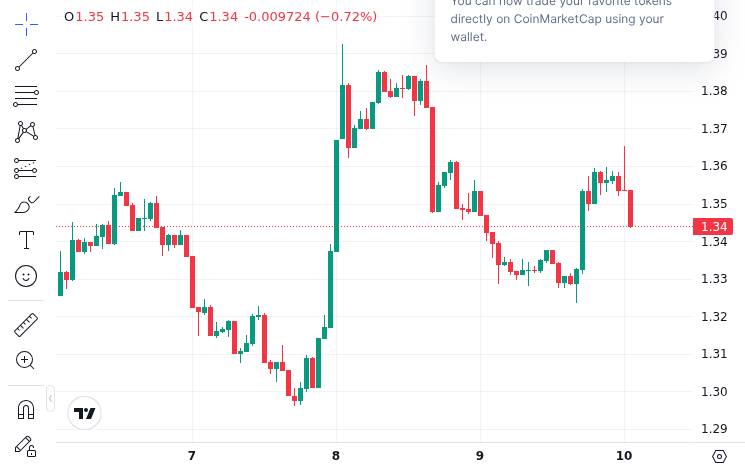
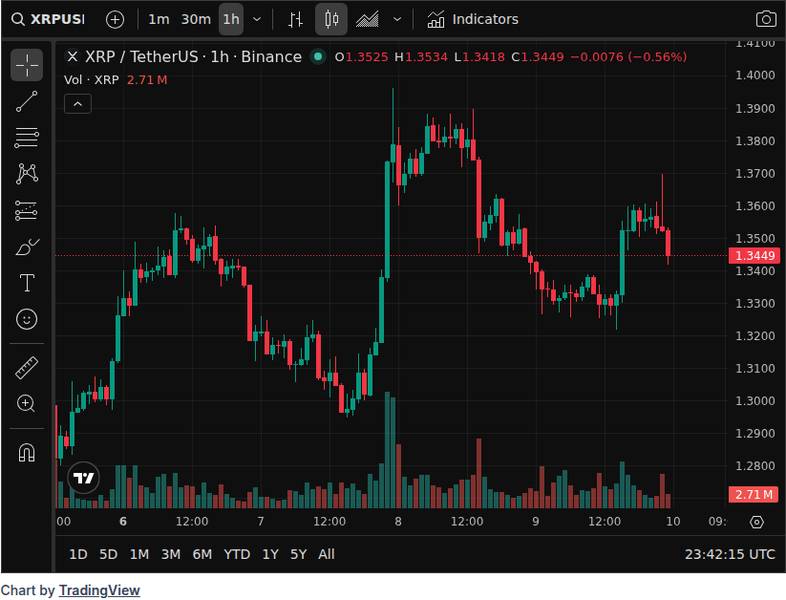
XRP has previously seen price movements driven by narrative shifts around institutional adoption. As XRP led institutional crypto inflows earlier this year, the token demonstrated sensitivity to enterprise-adoption storylines. Whether FedNow expansion translates into measurable demand remains unproven.
What Could Validate Or Invalidate This Thesis
Readers evaluating the FedNow-to-XRP narrative should watch for concrete signals rather than relying on speculation. Supra’s overview of FedNow and Ripple identifies several conditions that would need to materialize for XRP to benefit meaningfully from payment-rail modernization.
Validating signals include: enterprise payment pilots that route through Ripple’s ODL using XRP, new corridor activity in regions where FedNow-connected banks also handle international transfers, and regulatory clarity that permits U.S. financial institutions to use digital assets in settlement workflows. The U.S. Treasury’s evolving approach to digital asset oversight will play a role in whether banks feel comfortable integrating crypto-based liquidity tools.
Invalidating signals are equally important. If FedNow expands without generating cross-border interoperability demand, or if banks adopt non-crypto solutions for international settlement speed, the XRP thesis weakens. A persistent divergence between XRP price action and measurable utility indicators, such as ODL transaction volume, would suggest narrative-driven speculation rather than fundamental demand.
Over-speculation is a real risk. Crypto markets have repeatedly priced in institutional adoption narratives that failed to materialize on expected timelines. Investors should monitor actual institutional flow data and Ripple’s published corridor metrics rather than treating FedNow headlines as a direct catalyst for XRP price appreciation.
The practical checklist for tracking this narrative: watch for official Ripple partnership announcements with FedNow-connected institutions, monitor U.S. regulatory developments around digital asset use in banking, and compare XRP’s on-chain utility metrics against its market price. Until concrete adoption data emerges, the FedNow-XRP connection remains a thesis, not a fact.
Disclaimer: This article is for informational purposes only and does not constitute financial or investment advice. Cryptocurrency and digital asset markets carry significant risk. Always do your own research before making decisions.