
Kraken Gets Direct Fed Access in First for Crypto Banking
The Federal Reserve Bank of Kansas City approved a limited purpose account for Kraken Financial on March 4, 2026, making the Wyoming-based crypto bank the first digital asset firm to secure direct access to Federal Reserve payment infrastructure under the central bank’s tiered review framework.
The approval covers Payward Financial, operating as Kraken Financial, and is valid for an initial term of one year with restrictions tailored to the firm’s business model and risk profile.
The Kansas City Fed classified Kraken Financial as a Tier 3 entity under the Federal Reserve Board’s Account Access Guidelines, the category reserved for institutions with novel charter types that face the most extensive review.
What Kraken’s Fed Account Actually Enables
Direct Fed access, in practical terms, means a financial institution can hold reserves at and transact through the Federal Reserve system without relying on an intermediary bank. For Kraken, the approval could enable direct connectivity to Federal Reserve services such as Fedwire, the real-time gross settlement system used for high-value transfers.
Kraken has described the account as a master account that will let it connect directly to payment rails rather than routing transfers through third-party banks. However, the Kansas City Fed stated it does not disclose specific details about account holders’ access to the full range of Federal Reserve financial services, so the precise scope of Kraken’s access remains unclear.
The distinction matters. The Federal Reserve Board’s August 2022 final guidelines created the tiered review framework that governs these approvals, with Tier 3 applying the strictest scrutiny to institutions whose business models or charter types are considered novel.
WHAT TO KNOW
- What happened: The Kansas City Fed approved a one-year limited purpose account for Kraken Financial, classified under the strictest Tier 3 review category.
- Why it matters: This is the first time a crypto-focused bank has received this type of Federal Reserve account approval, potentially reducing its dependence on intermediary banks for payment processing.
Why This Rattles Traditional Banking
The Bank Policy Institute, which represents major U.S. banks, responded sharply. In a public statement, the group said it was “deeply concerned” that the Kansas City Fed approved the account before the Federal Reserve Board finalized a policy framework for limited-purpose payment accounts.
“We are deeply concerned that the Federal Reserve Bank of Kansas City has approved an account request for a limited purpose master account.”
The criticism centers on timing. On December 19, 2025, the Federal Reserve Board separately requested public input on a proposed “payment account” product that would be distinct from a master account. Critics argue the Kansas City Fed moved ahead of that still-evolving framework.
For crypto firms that have long struggled with banking access, the approval represents a potential shift. Exchanges and custodians have historically depended on relationships with traditional banks willing to serve the sector, a dependency that has created bottlenecks and vulnerability to broader market and policy uncertainty.
Arjun Sethi, Kraken’s co-CEO, framed the approval as a convergence of crypto infrastructure and sovereign financial rails, according to a company blog post. The characterization reflects Kraken’s view that the account is a milestone, though independent confirmation of its “first in U.S. history” framing has not been provided by the Kansas City Fed itself.
What Comes Next for Kraken and the Sector
The one-year initial term means Kraken Financial will face a renewal decision in early 2027. The restrictions attached to the account, while not publicly detailed, suggest the Kansas City Fed is treating this as a monitored trial rather than a permanent arrangement.
Whether the approval sets a precedent for other crypto-native institutions depends on several factors. The Federal Reserve Board’s pending payment account proposal could reshape the rules before other applicants reach the finish line. If the Board finalizes a framework that differs from the existing master account guidelines, future applicants may face a different process entirely.
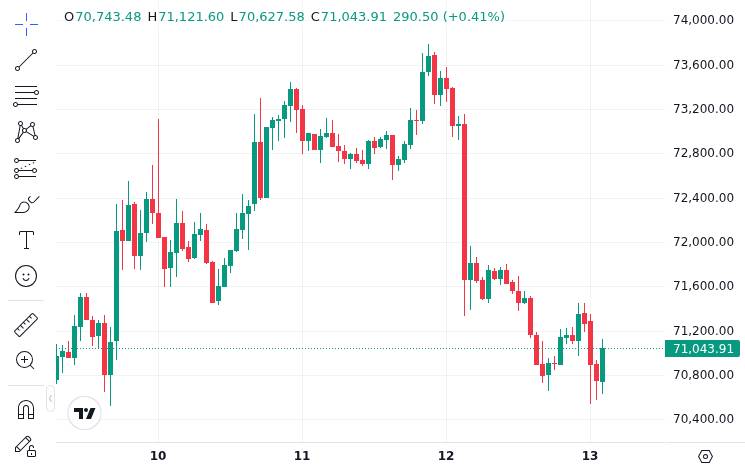
The approval also arrives during a period of broad market stress. Bitcoin traded at $71,070 with a 24-hour decline of 2.69%, and the Fear and Greed Index sat at 12, deep in “Extreme Fear” territory, a backdrop that may amplify scrutiny of any moves perceived as expanding crypto’s footprint in traditional finance.
For firms watching from the sidelines, the key question is whether the Kansas City Fed’s decision survives political and institutional pushback. The BPI’s objections signal that traditional banking lobbies will contest any expansion of Fed access to non-traditional institutions, and the signals traders are watching in the current market may determine how aggressively crypto firms push for similar approvals.
Kraken’s account is live, but its long-term significance hinges on whether the one-year term gets extended, whether the Fed Board’s payment account framework narrows or widens the door, and whether other crypto banks, including those exploring novel risk profiles across different blockchain ecosystems, attempt to follow the same path through Wyoming’s special-purpose depository institution charter.
Disclaimer: This article is for informational purposes only and does not constitute financial or investment advice. Cryptocurrency and digital asset markets carry significant risk. Always do your own research before making decisions.