Vercel Breach Leaves DeFi Frontends on Alert Amid $2M Claim
Vercel confirmed on April 19, 2026 that unauthorized access affected certain internal systems after a compromised Context.ai tool enabled an attacker to reach employee credentials. While a $2 million ransom claim has circulated through attacker messages relayed by security media, Vercel has not publicly confirmed any negotiation, and no evidence of malicious code injection into DeFi frontends has emerged.
What Vercel confirmed about the April 2026 security incident
Vercel disclosed on April 19, 2026 that it engaged incident response experts and notified law enforcement after discovering the unauthorized access. The company said its services remained operational throughout the incident and that only a limited subset of customers was initially identified as impacted.
The attack chain began with Context.ai, whose deprecated AI Office Suite suffered an AWS security incident. Context.ai said the actor likely compromised OAuth tokens, including one tied to a Vercel employee’s Google Workspace account.
Through that compromised Google Workspace access, the attacker reached some non-sensitive environment variables within Vercel’s systems. Vercel explicitly stated there was no evidence that sensitive environment variables were accessed, a distinction that matters for teams storing deployment secrets or API keys on the platform.
Why the breach puts DeFi frontends on notice
The incident highlights a category of risk that smart-contract audits do not cover: frontend hosting and deployment credential compromise. Many DeFi protocols rely on Vercel to serve their web interfaces, meaning a supply-chain attack at the hosting layer could theoretically inject malicious transaction approval prompts without touching on-chain code.
Solana DEX Orca, which hosts its frontend on Vercel, rotated deployment credentials as a precaution. Orca said its on-chain protocol and user funds were not affected. No other DeFi team has been publicly named as impacted.
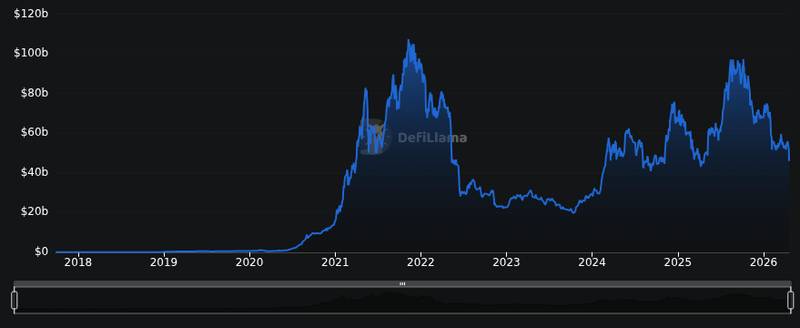
The broader DeFi sector that depends on web frontends holds substantial value. Ethereum alone carries over $105.8 billion in total value locked, providing a benchmark for how much capital sits behind smart contracts that users access through hosted frontends.
No public evidence confirms malicious code injection into any DeFi frontend, and no user-fund losses tied to this incident were publicly confirmed as of April 20, 2026. The situation resembles operational security concerns rather than an active exploit, similar in category to previous infrastructure-level incidents like the Tornado Cash-funded wallet that drained 116,500 rsETH from KelpDAO through a different attack vector.
ETH traded at $2,311.45 at press time, with the broader crypto market registering a Fear & Greed Index score of 29, indicating a risk-off environment. The incident adds to a backdrop where government enforcement actions and security events have kept sentiment subdued.
What remains unverified about the $2 million ransom narrative
According to unconfirmed attacker messages relayed by BleepingComputer, the attacker posted a forum listing advertising Vercel access and later claimed on Telegram to have discussed a $2 million ransom with the company.
BleepingComputer said it could not independently confirm a leaked 580-record employee file or an internal dashboard screenshot shared by the attacker. No official Vercel or Context.ai statement has confirmed ransom negotiations or authenticated the alleged leaked data.
No official public list of affected crypto or DeFi customers has been released as of April 20, 2026. The gap between what Vercel has confirmed, limited access to non-sensitive environment variables, and what the attacker claims remains wide.
DeFi teams hosting frontends on Vercel should watch for additional customer notifications, updated scope disclosures, or any evidence of frontend tampering. The incident underscores why projects increasingly consider diversified infrastructure strategies that reduce single-provider dependency for critical user-facing interfaces.
Disclaimer: This article is for informational purposes only and does not constitute financial or investment advice. Cryptocurrency and digital asset markets carry significant risk. Always do your own research before making decisions.