
Tether, TRON and TRM Labs Freeze $450 Million in T3 Crime Crackdown
The T3 Financial Crime Unit, a joint initiative between Tether, TRON and TRM Labs, announced on May 14 that it has frozen more than $450 million in illicit crypto assets since its launch, marking one of the largest private-sector enforcement efforts in digital asset history.
From $12 Million to $450 Million in Under Two Years
T3 FCU was established on September 10, 2024, when Tether, TRON and TRM Labs created what they called the first private-sector financial crime unit dedicated to combating crypto crime. In its first weeks, the unit froze over 12 million USDT.
That initial figure has since grown to more than $450 million in frozen illicit assets globally. The unit said it intercepted 43.9% more illicit proceeds in 2025 than in the previous year, and now coordinates with regulatory agencies and government partners across 23 jurisdictions.
Tether CEO Paolo Ardoino framed the effort as a core business obligation rather than an optional add-on.
“Compliance is not an option; it is a part of our commitment to protect our users and stop any illicit behaviors.”
Paolo Ardoino, CEO of Tether
How the Three-Party Model Works
Each partner in T3 FCU fills a distinct role. Tether, as the issuer of USDT, holds the ability to freeze stablecoin balances on-chain. TRON provides the blockchain infrastructure where a significant share of USDT circulates. TRM Labs contributes blockchain intelligence and analytics to identify and trace illicit flows.
The combination means the unit can detect suspicious activity, trace it across wallets, and freeze the associated funds, all without waiting for a court order in every jurisdiction. The model has drawn attention from international bodies; the Financial Action Task Force has highlighted T3 FCU and TRM’s Beacon Network as examples of effective public-private partnerships.
This kind of cross-sector coordination resembles the broader trend of institutional players deepening their crypto involvement, though in the enforcement space rather than the investment side.
Operation Lusocoin: A Case Study in Cross-Border Enforcement
One of the unit’s most high-profile operations involved Brazil’s Federal Police. Operation Lusocoin targeted crypto-facilitated money laundering, with T3 FCU helping freeze 4,336,883 USDT as part of a case involving potential restraints exceeding R$3 billion in crypto assets.
The Brazilian operation illustrates why the partnership model matters. Local law enforcement identified the criminal activity, but freezing stablecoin assets required cooperation from the token issuer and blockchain analytics firms operating outside Brazil’s direct jurisdiction.
The Scale of the Problem T3 FCU Is Targeting
TRM Labs estimated that illicit cryptocurrency flows reached $158 billion in 2025, the highest level observed in the past five years and a reversal of a multi-year decline. Against that backdrop, $450 million in frozen assets represents a fraction of total illicit flows, but the 43.9% year-over-year increase in interceptions suggests the unit is scaling its operations.
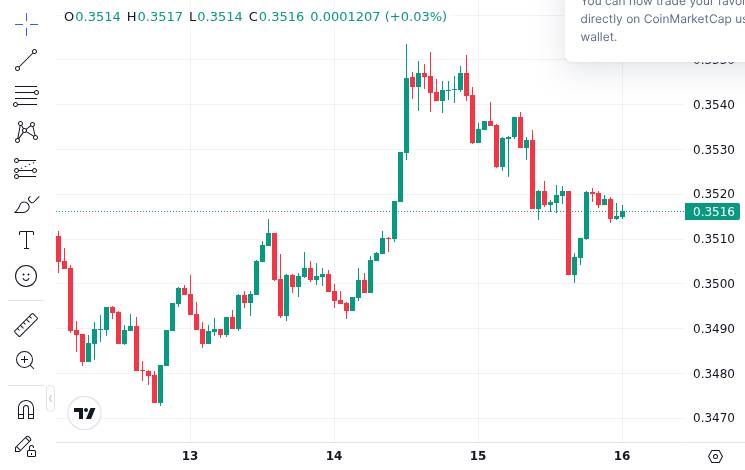
The crypto market itself remains cautious. The Fear & Greed Index sits at 43, classified as “Fear,” reflecting broader uncertainty that enforcement actions alone have not resolved. TRON’s native token TRX traded at approximately $0.35 with a market cap near $33.3 billion, showing minimal immediate price reaction to the announcement.
What This Means for Crypto’s Credibility
The $450 million freeze sends a signal that stablecoin issuers can function as enforcement chokepoints, not just payment rails. For an industry that has faced persistent criticism over its use in money laundering and sanctions evasion, voluntary cooperation with law enforcement across 23 countries represents a meaningful shift.
Whether this model scales further depends on how other stablecoin issuers and blockchain networks respond. As leverage and risk appetite shift across exchanges, enforcement infrastructure may become as important to market confidence as trading volume or technical resilience.
T3 FCU’s next milestones will likely be measured not just in dollars frozen, but in whether the 43.9% growth rate in interceptions can keep pace with the record $158 billion in illicit flows that TRM Labs documented for 2025.
Disclaimer: This article is for informational purposes only and does not constitute financial or investment advice. Cryptocurrency and digital asset markets carry significant risk. Always do your own research before making decisions.