
Senators’ Revised Stablecoin Earnings Draft Could Reshape Crypto Market Structure
Secondary reporting has described a Senate proposal as a revised stablecoin earnings draft, but the public text that can be checked is the Senate Banking Committee’s market structure draft. In its stablecoin provisions, that draft blocks passive yield for simply holding a payment stablecoin while preserving several forms of usage-based rewards, a distinction that would matter for issuers, exchanges, and DeFi platforms if it survives the legislative process.
What Changed in the Revised Stablecoin Earnings Draft
In the stablecoin context, “earnings” effectively means interest or yield paid just for parking funds in a token. Section 404(b)(1) says a digital asset service provider may not pay any form of interest or yield solely in connection with holding a payment stablecoin.
The same text keeps a separate lane for usage-based incentives. Section 404(b)(2) preserves rewards tied to payments, transfers, wallet or platform use, loyalty programs, providing liquidity or collateral, and governance, validation, staking, or other ecosystem participation.
The issuer carveout is also material. Section 404(e)(2) says a permitted payment stablecoin issuer is not deemed to pay interest or yield solely because a third party independently offers rewards unless the issuer directs that program.
Taken together, the split between Section 404(b)(1) and Section 404(b)(2) shifts the commercial question from who can share reserve income to who can drive payments, wallet usage, liquidity provision, and governance activity.
Why the Draft Could Reshape Crypto Market Structure
The Senate Banking Committee’s CLARITY Act fact sheet says the bill draws a bright line between SEC and CFTC jurisdiction and creates a tailored disclosure regime for digital asset offerings and sales. That framework matters because stablecoin rewards would be treated as part of a broader rewrite of crypto supervision rather than as a narrow product-level issue.
Reuters reported the Senate version would give the CFTC authority to police spot crypto markets and require the SEC and CFTC to issue a joint rule on disclosures for rewards paid in connection with using stablecoins. If that approach holds, platforms would have a clearer incentive to emphasize operational rewards tied to usage instead of interest-like payouts tied only to balances.
Cointelegraph, citing Messari, reported weekly net stablecoin inflows of $1.7 billion, up 414.5% week on week. Those flow numbers suggest the policy fight is happening while capital is still moving into stablecoins, which is why the final wording could redirect liquidity instead of simply suppressing demand.
One reason the carveouts matter is that activity-linked ecosystems already hold meaningful size. Ethena shows roughly $6.64 billion in Ethereum TVL on DeFiLlama, making it a live example of how much crypto liquidity is already concentrated in models that depend on participation and collateral management.
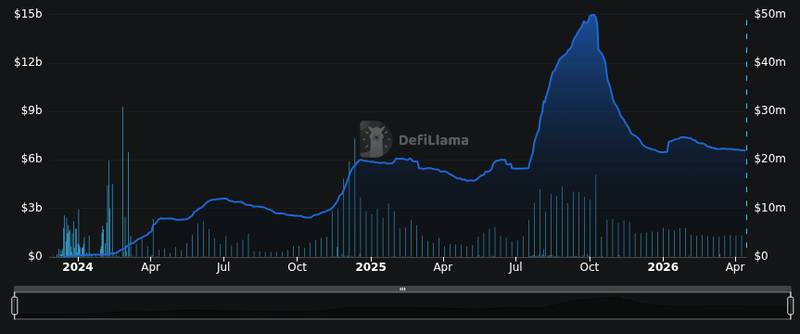
On the market side, ENA traded near $0.096 with a $842 million market cap and about $92.5 million in 24-hour volume on CoinGecko. Those figures do not prove the bill would favor Ethena, but they show why investors are watching activity-linked stablecoin models as the Senate debate develops.
Which Crypto Segments Stand to Gain or Lose
Stablecoin issuers are the most directly exposed if their growth strategy depends on passing reserve income through to holders, because Section 404(b)(1) specifically targets yield paid solely for holding a payment stablecoin.
Exchanges, wallets, and DeFi venues could have more room to adapt because Section 404(b)(2) expressly preserves payments-, wallet-, platform-, liquidity-, collateral-, governance-, validation-, and staking-linked incentives. That makes the proposal a market-structure issue as much as a stablecoin rule, since distribution channels may gain leverage if they can still control the reward layer.
The same logic explains why Fed Chair Nominee Kevin Warsh Has Crypto Exposure in Portfolio, Trump Fed Pick Kevin Warsh Discloses SpaceX, Polymarket and Solana Holdings, and Warsh Crypto Holdings Revealed in Fed Disclosure have drawn reader attention on bitcoininfonews: crypto policy in Washington is increasingly being read through both regulatory text and the personal market exposure of senior U.S. figures.
The third-party language in Section 404(e)(2) creates a possible middle ground, because an issuer could keep the token itself reward-neutral while outside platforms independently layer incentives on top. That is the clearest sign in the public draft that senators are trying to block passive stablecoin interest without eliminating every promotional or ecosystem-based reward model.
A single secondary report described the proposal as a revised draft, but no separately published updated Senate text has been confirmed beyond the public committee document. For now, the verified takeaway is narrower: the draft bans passive yield tied solely to holding a payment stablecoin while preserving several reward structures tied to actual use.
Disclaimer: This article is for informational purposes only and does not constitute financial or investment advice. Cryptocurrency and digital asset markets carry significant risk. Always do your own research before making decisions.