
Solayer launches Visa-compatible card for USDC payments
Solayer has launched a Visa-compatible physical card that lets users spend their USDC balances at stores, online merchants, and ATMs, marking another push to bring stablecoin payments into everyday commerce.
What Solayer announced with its Visa-compatible USDC card
The company announced the Solayer Pay Physical Card on May 14, 2026, describing it as a Visa-compatible card that supports in-store, contactless, online, and ATM transactions in supported regions. Payments draw directly from users’ USDC balances through Solayer Pay.
The card itself is free, though new users pay a one-time $20 account activation fee. Shipping runs $14.99 for US Standard delivery and $19.99 for International Standard, according to Solayer’s product documentation.
The physical card extends a digital product Solayer has been developing since early 2025. The company launched its Emerald Card in April 2025 with USDC deposit support, rolling it out to over 40,000 users. Solayer Pay is also integrated with Apple Pay, Google Pay, and Visa’s global network.
That rollout was not without hiccups. Blockworks reported that Solayer corrected an earlier press release that had suggested the Emerald Card would launch in the United States at that stage. The May 2026 physical card documentation now lists US shipping options, though the company refers broadly to “supported regions” rather than guaranteeing universal availability.
Solayer CEO Margie Feng framed the product around practical adoption.
“Crypto payments only become meaningful when they integrate naturally into everyday life.”
— Margie Feng, Solayer CEO (via GlobeNewswire)
How the card could expand stablecoin spending
USDC sits at the center of the card’s value proposition. The stablecoin trades at $0.9999 with a market cap above $76.9 billion, making it one of the most liquid assets available for point-of-sale conversion.
Card-based access removes a key friction point for crypto spending. Instead of requiring merchants to accept crypto directly, Visa compatibility lets users tap into the existing payment network that millions of merchants already support. For users holding stablecoin balances, the card turns what would otherwise be an on-ramp/off-ramp problem into a single swipe.
The broader stablecoin infrastructure space has been active on multiple fronts. Compliance-focused efforts like the freeze of $450 million in illicit funds by Tether, TRON, and TRM Labs show how the ecosystem is maturing alongside consumer products like Solayer’s card.
Meanwhile, activity across digital asset markets continues to evolve. Indicators like the XRP leverage ratio hitting a 2-month high on Binance reflect ongoing speculative interest, while products like Solayer’s card target users seeking practical utility over trading exposure.
Why Solayer’s move stands out in crypto payments
Solayer is not alone in pursuing crypto-to-card payments on Solana. Solflare offers a competing self-custodial Mastercard debit card that also supports USDC on Solana, though it is currently limited to the EEA, UK, and select regions. Solayer’s Visa partnership and its existing 40,000-user base give it a different entry point.
According to Solayer’s own press release, the company describes Solayer Pay as one of the most widely adopted crypto cards in the Solana ecosystem, though no independent ranking confirms that claim.
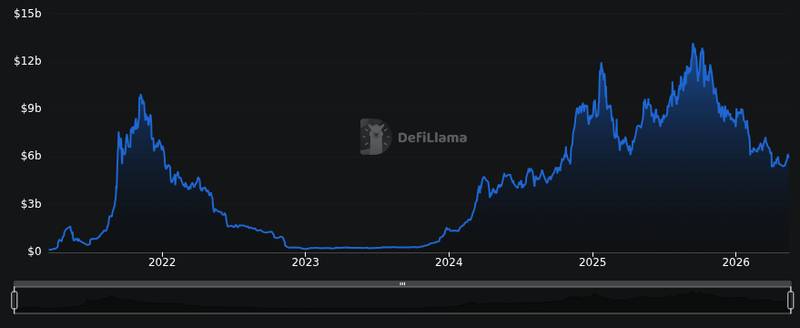
The Solana ecosystem backing the product carries significant scale. Total value locked across Solana protocols currently sits at $13.29 billion, reflecting sustained DeFi activity on the network.
The press release also references Solayer Chain’s infiniSVM technology, which the company claims delivers over 330,000 transactions per second with roughly 400-millisecond finality. These are Solayer’s own performance figures; no independent benchmark has confirmed them.
Security concerns remain top of mind across the crypto industry, with projects like Tezos raising warnings about quantum computing risks for blockchain networks. For payment-focused products like Solayer’s card, trust in the underlying infrastructure is essential to mainstream adoption.
Solayer’s physical card is now available for order through the Solayer Pay platform, with activation requiring KYC verification. The Fear & Greed Index currently reads 31 (Fear), suggesting that products offering tangible utility rather than speculative upside may find a receptive audience among stablecoin holders.
Disclaimer: This article is for informational purposes only and does not constitute financial or investment advice. Cryptocurrency and digital asset markets carry significant risk. Always do your own research before making decisions.