
South Korea Delays Digital Asset Basic Act Ahead of June Elections
South Korea’s ruling Democratic Party has postponed substantive negotiations on the Digital Asset Basic Act until after the country’s June 3 local elections, pushing back the timeline for the most comprehensive crypto legislation the National Assembly has considered.
Democratic Party digital-asset task force chair Lee Jeong-mun said on April 16 that legislative discussion on the bill would intensify only after the June 3, 2026 elections. The party initially planned to place the bill on the Political Affairs Committee’s bill-review subcommittee agenda on April 27 as the first step toward public deliberation.
That subcommittee meeting was itself postponed. The first review session was rescheduled from April 27 to May 12, adding further delay to a bill that has already spent nearly a year in legislative limbo.
What the Digital Asset Basic Act delay means before the June elections
The Digital Asset Basic Act was originally filed by Democratic Party lawmaker Min Byeong-deok on June 10, 2025. It is designed as the second phase of South Korea’s crypto regulatory framework, covering digital-asset definitions, issuance, distribution, disclosure rules, service-provider licensing, and stablecoins.
South Korea already has a first-phase crypto framework in force, but the Basic Act represents a far broader regulatory overhaul. The delay means the bill will have sat in committee for nearly a full year before lawmakers engage in substantive debate.
Kim Hyun-jung, another party figure involved in the process, confirmed on April 22 that the framework law would have to move forward after the June local elections. The political calculus is straightforward: lawmakers are reluctant to take positions on contentious financial regulation while campaigning.
WHAT TO KNOW
- The delay is election-driven: The Democratic Party confirmed that substantive Digital Asset Basic Act negotiations will not begin until after June 3, 2026 local elections.
- The subcommittee start already slipped: The initial bill-review session moved from April 27 to May 12, signaling that even procedural steps are losing momentum.
Why South Korea’s crypto policy timeline now looks less certain
Two unresolved disputes sit at the center of the stalled negotiations. Lawmakers and regulators disagree over exchange-shareholder ownership limits, a provision that could reshape how major platforms like Upbit and Bithumb structure their corporate governance.
The second dispute involves whether won-denominated stablecoins should be issued exclusively through a bank-led consortium model. That question pits traditional financial institutions, which favor a centralized issuance framework, against crypto-native firms pushing for broader participation. The outcome could determine how South Korea’s stablecoin market develops relative to approaches taken in institutional crypto infrastructure elsewhere.
Election outcomes add another layer of uncertainty. If local election results shift the political balance within the Democratic Party or alter committee assignments, the bill’s trajectory could change. Lawmakers who championed specific provisions may lose influence, while newly empowered figures may push different priorities.
For exchanges, token issuers, and digital-asset businesses operating in South Korea, the regulatory gap creates planning challenges. Companies cannot finalize compliance strategies for rules that remain undefined, and the longer the delay extends, the wider the gap grows between South Korea’s framework and those being implemented in other major markets.
What to watch next after the election-driven delay
The most immediate signal will come from the bill-review subcommittee session now scheduled for May 12. Whether that meeting proceeds or faces another postponement will indicate how much political will exists to advance the legislation even before the election.
After the June 3 elections, the key question is whether Democratic Party leadership reaffirms the bill as a legislative priority. A post-election agenda that deprioritizes financial regulation could push the Digital Asset Basic Act into the second half of 2026 or beyond, a pattern that would echo regulatory uncertainty affecting digital asset governance in other jurisdictions.
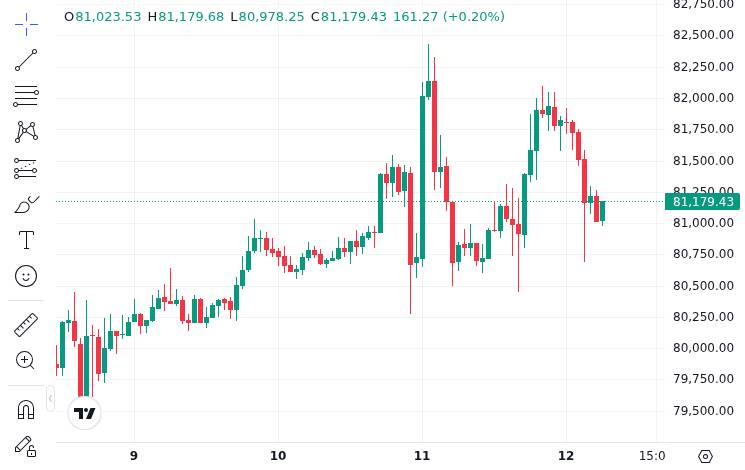
Bitcoin traded at $81,142 at the time of reporting, with the Fear & Greed Index at a neutral 49. South Korean crypto markets, which consistently rank among the world’s most active by trading volume, have shown limited immediate reaction to the legislative delay.
Stakeholders will also watch for signals from the Financial Services Commission and the Bank of Korea on whether they intend to advance stablecoin or exchange-governance rules through administrative action while the legislature remains stalled. Regulatory agencies sometimes move independently when legislative timelines slip, particularly on issues like token oversight where market activity outpaces lawmaking.
The bill’s path after the elections will depend on whether the ownership-cap and stablecoin disputes find compromise. Until those core disagreements are resolved, the Digital Asset Basic Act remains a framework without a timeline.
Disclaimer: This article is for informational purposes only and does not constitute financial or investment advice. Cryptocurrency and digital asset markets carry significant risk. Always do your own research before making decisions.