



Improve Bitcoin wallet privacy by avoiding address reuse, separating UTXOs, protecting xpubs, labeling payments, and checking change outputs.
A Bitcoin wallet protects transaction privacy best when it creates a new receiving address for every payment and keeps unrelated funds separate. Reusing one address gives customers, employers, exchanges, or anyone else who knows that address a simple way to follow its complete public payment history and current balance.
A fresh address is the first step, not the whole solution. Privacy can be lost again when the wallet combines separate coins in one transaction, exposes an extended public key, or sends change to an output that links old and new activity. This guide explains those four actions in plain language and shows the checks that matter before receiving or sending bitcoin.
Address reuse turns separate payments into one visible history
Every confirmed Bitcoin transaction is public. A person does not need your name to inspect an address, but once that address is connected to you, all payments sent to it can be viewed together. Reusing the same donation address, invoice address, or withdrawal address therefore creates a permanent public record that is much easier to interpret than several separate addresses.
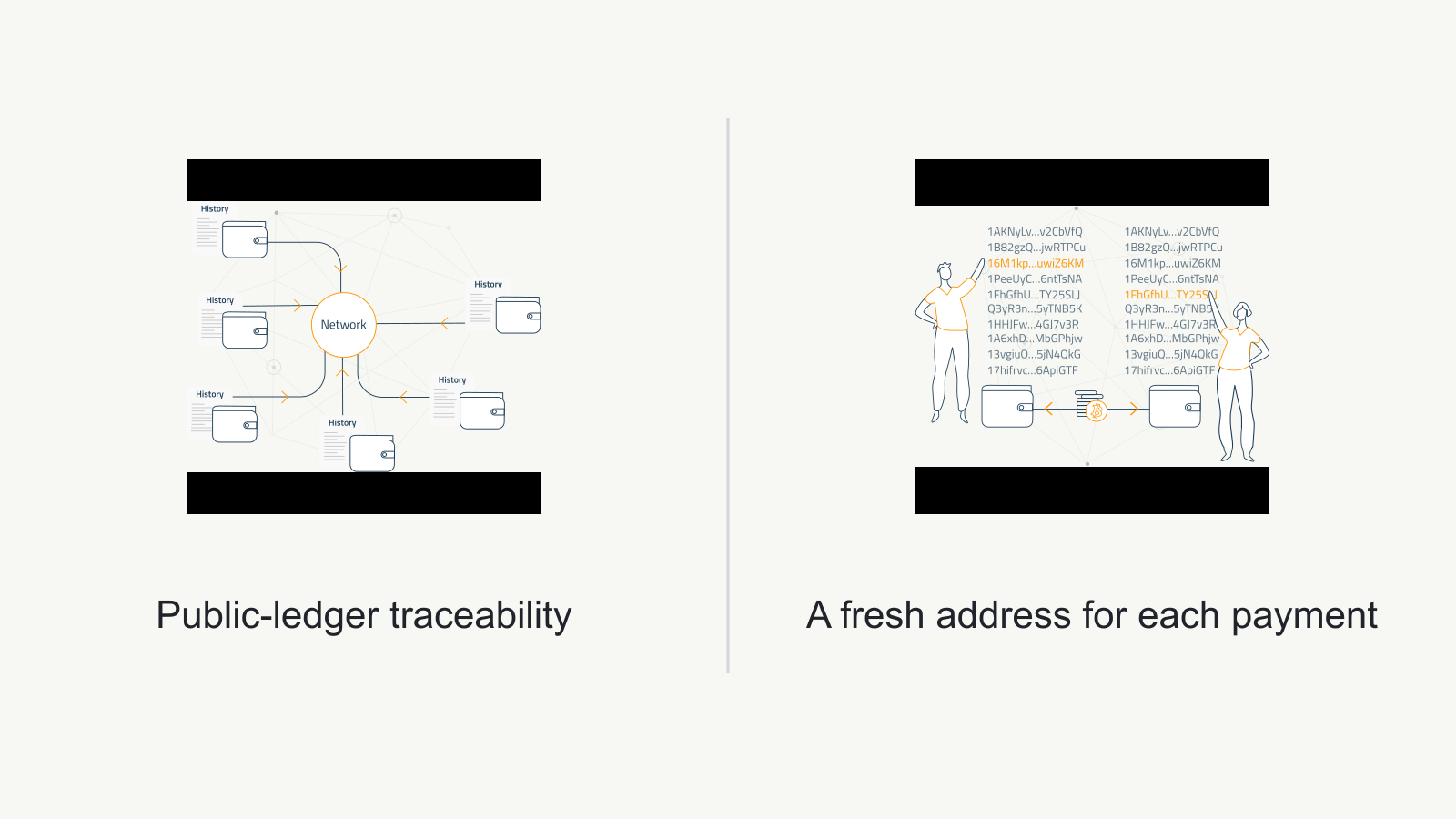
Suppose a freelancer publishes one address and receives five client payments. Any client can see the other four payments, estimate revenue, and watch later spending. Five fresh addresses do not make the payments invisible, but they remove the public identifier connecting those receipts.
The practical rule is simple: show one new address for each payer or invoice, verify it before sharing, and do not publish a long-term personal address. The same wallet backup can generate many addresses, so using a new address does not mean creating a new seed phrase or buying another device.
A fresh address separates each new incoming payment
Modern Bitcoin wallets normally generate a fresh address whenever the user presses Receive. The addresses look different, but they remain recoverable from the same wallet backup. Users only need to confirm that the displayed address belongs to the intended account and matches the address shown on the signing device when hardware verification is available.
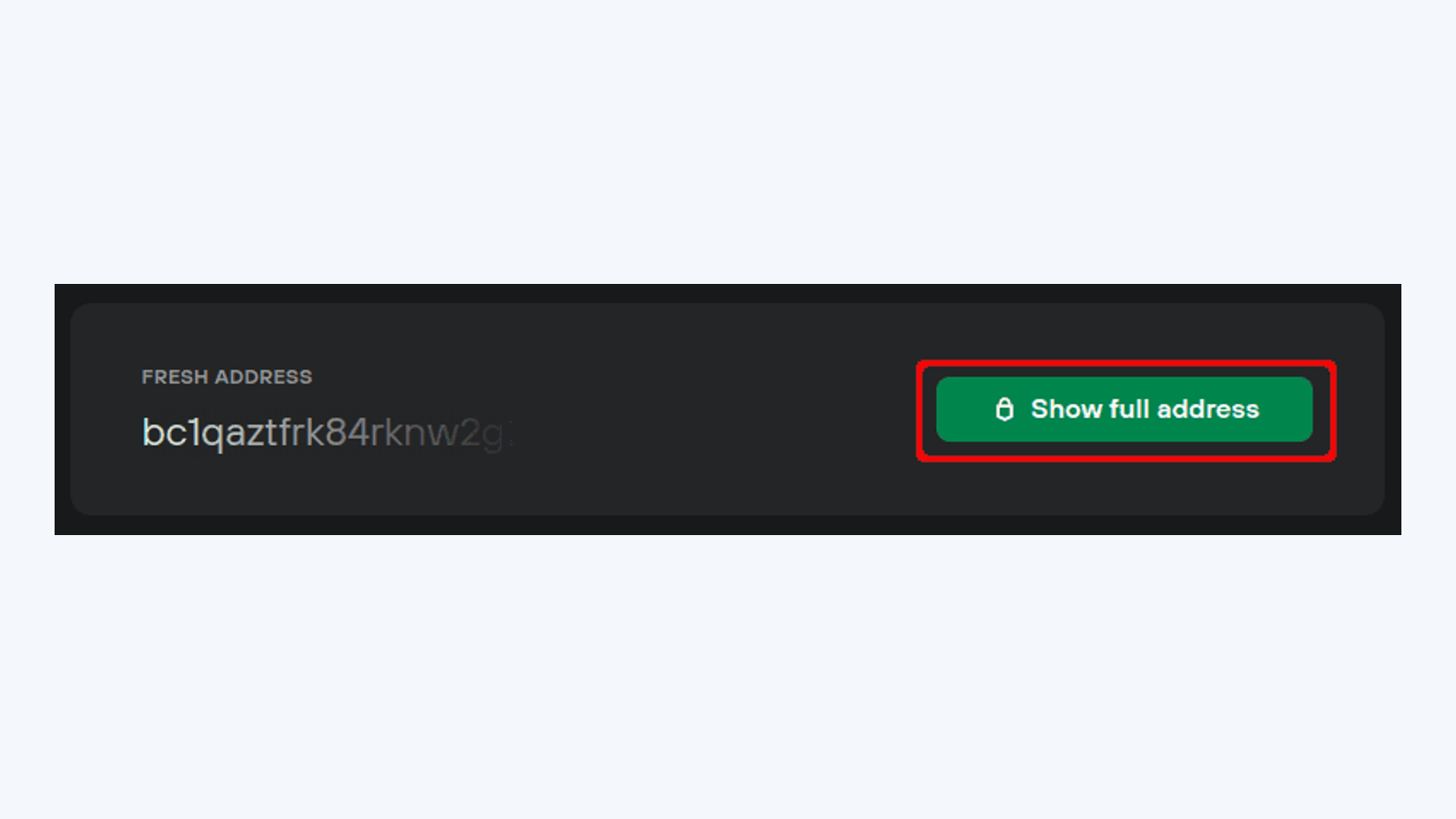
Fresh addresses work across common Bitcoin formats, including SegWit and Taproot. Format affects compatibility and transaction size, while reuse affects privacy. The Bitcoin wallet address types guide explains the differences. Before sharing an address, compare it on the wallet and trusted display using the Bitcoin wallet address verification process.
Four wallet actions create the clearest public links
The following actions explain most everyday privacy leaks. They do not all reveal a legal identity, but each one gives an observer more reliable evidence that separate payments, addresses, or balances belong together.
| Wallet action | Visible result on the blockchain or wallet service | Safer habit |
|---|---|---|
| Reusing one receive address | Several payments appear under one public identifier | Generate a fresh address for every payer or invoice |
| Combining unrelated UTXOs | Separate receipts become inputs in the same transaction | Use labels and coin control before sending |
| Sharing an xpub | The recipient can derive and monitor an entire account | Share one address unless full account visibility is required |
| Withdrawing from a KYC exchange | The exchange knows the destination address and withdrawal record | Withdraw into a dedicated account, then avoid mixing unrelated funds |
No wallet setting can erase an onchain link after confirmation, so unnecessary links should be removed before signing. The review screen is the last useful checkpoint for catching an address, input, xpub, or change decision that would expose more history than intended.
Combining UTXOs can reconnect separate histories
A UTXO is an individual piece of bitcoin received in an earlier transaction. A wallet balance may show 0.08 BTC, while the wallet actually controls several pieces such as 0.01 BTC, 0.02 BTC, and 0.05 BTC. When a payment is larger than one piece, the wallet may combine two or more UTXOs as transaction inputs.
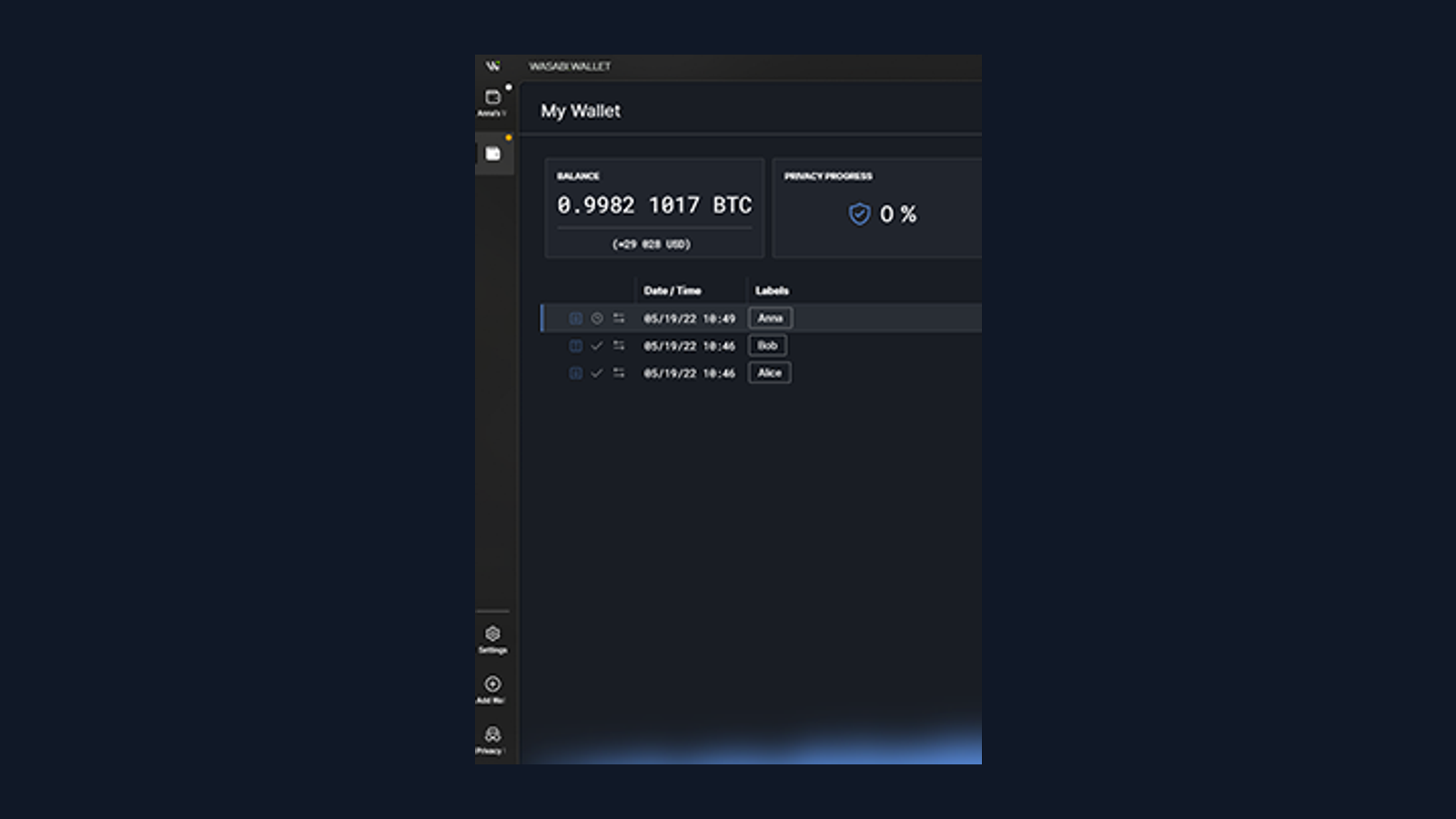
Combining inputs is normal Bitcoin behavior, but it creates a public connection. If one input came from a salary payment and another came from a public donation, spending them together gives an observer strong evidence that one wallet controls both. Fresh receiving addresses protected that separation only until the combined spend appeared.
Labels make this risk easier to see. A label such as “Client A,” “Exchange withdrawal,” or “Public donation” stays inside the wallet and does not appear on the blockchain, but it helps the owner avoid selecting unrelated inputs. The Bitcoin coin control and UTXO management guide covers manual input selection, while the wallet dust and UTXO cleanup guide explains why very small coins should not be merged automatically just to make the wallet look tidy.
Coin control should be used carefully because extra inputs increase the transaction fee and make the transaction larger. The aim is not to avoid every multi-input transaction, but to avoid connecting unrelated histories when another suitable coin can fund the payment by itself.
An xpub can reveal an entire Bitcoin account
An extended public key, usually called an xpub, lets software generate every address for one Bitcoin account and monitor its transactions without holding the private keys. This is useful for watch-only wallets, accounting systems, and payment servers, but it is far more revealing than a single receive address.
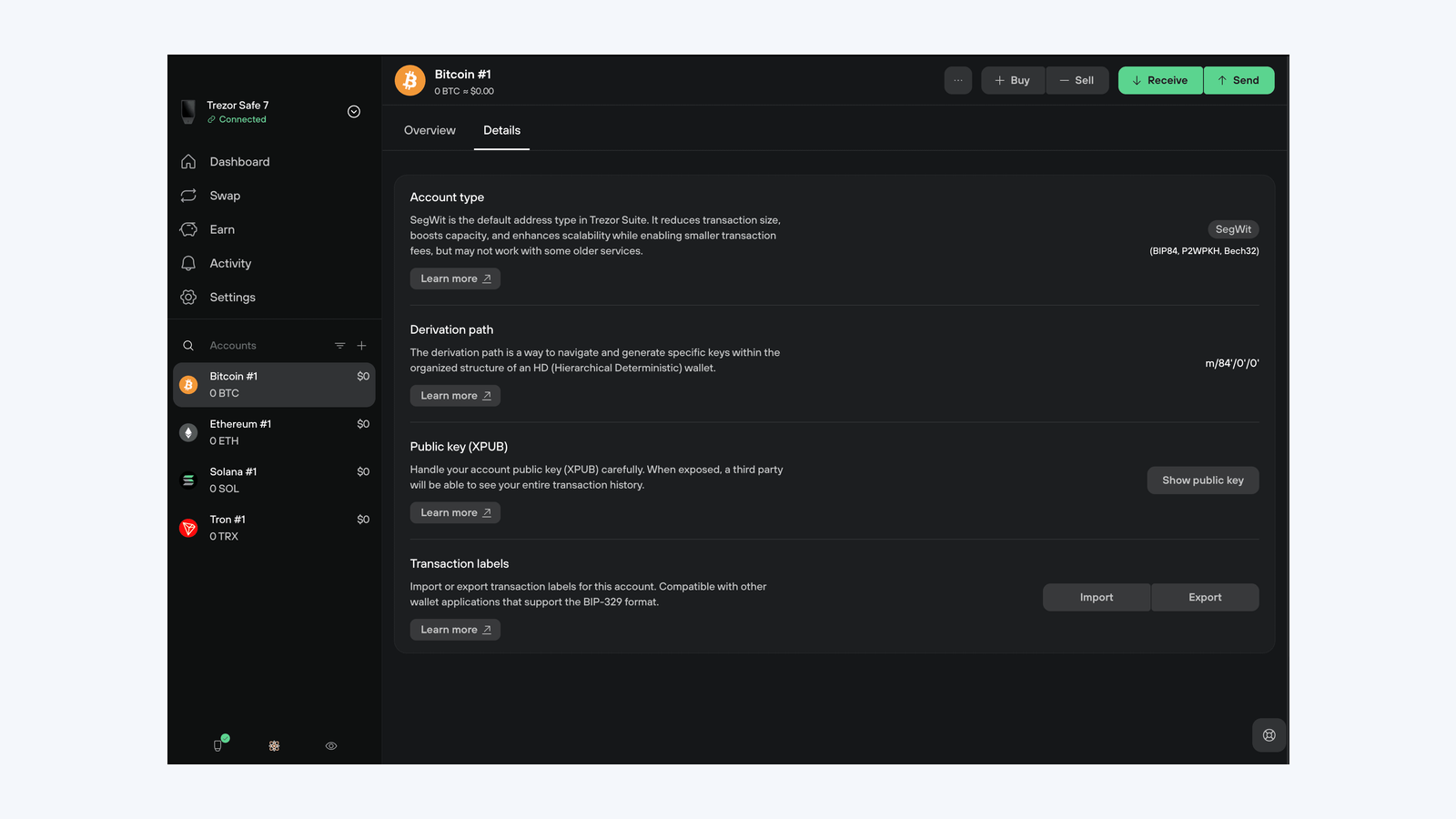
An xpub cannot spend bitcoin, but that does not make it safe to publish. A shop that receives an xpub for accounting can derive past and future addresses in that account, calculate balances, and connect transactions that looked unrelated to outside observers. Treat the xpub as private financial information and share it only when the recipient genuinely needs account-wide visibility.
Separate accounts limit xpub exposure. A business can keep invoices, personal savings, and public donations in different accounts so one shared business xpub does not reveal every address controlled by the same seed phrase.
Change is the bitcoin returned to the wallet
Bitcoin transactions spend complete UTXOs rather than taking only the exact amount needed. If the wallet spends a 0.05 BTC input to pay 0.02 BTC, it creates one payment output and usually one change output. After the transaction fee is deducted, the remaining bitcoin returns to a new address controlled by the sender.
Change can confuse new users because both outputs are public and neither is labeled on the blockchain. Wallet software usually identifies its own change internally, but an observer may use amounts, address formats, and later spending behavior to estimate which output returned to the sender. Reusing an old receive address for change makes that connection even clearer.
A good wallet generates change automatically and identifies it during review. Confirm the payment amount, fee, selected inputs, and outputs before signing. The Bitcoin wallet transaction fee guide explains how input and output counts affect cost.
Exchange withdrawals need their own account boundary
A regulated exchange already knows the customer and records the withdrawal destination. Sending bitcoin from that exchange directly to a public donation address, business wallet, or long-term savings address allows the exchange to associate that destination with the account holder. The blockchain then preserves any later movement from the known address.
A dedicated exchange-withdrawal account creates a clearer boundary. Label the withdrawal and keep it separate from unrelated receipts. Several self-transfers do not automatically create privacy; they add fees and may still leave a traceable pattern.
A simple privacy routine prevents most avoidable links
- Create a fresh receive address. Open the intended Bitcoin account and generate a new address for the specific payer, invoice, or withdrawal.
- Verify the complete address. Compare the value on the trusted wallet display before sharing it, especially when the payment is large or the computer may be compromised.
- Add a useful private label. Record the source and purpose, such as “Client A invoice 18” or “Exchange withdrawal August,” without placing sensitive details on a public invoice.
- Review inputs before sending. Keep unrelated salary, business, donation, and savings UTXOs separate unless the payment genuinely requires them to be combined.
- Check payment and change outputs. Confirm the recipient amount, fee, and expected change before signing, then preserve the labels after confirmation.
This routine makes the wallet’s public actions match the user’s intended boundaries. Clear inputs, outputs, labels, and coin control are more useful than a wallet that shows only a total balance and a Send button.
Wallet privacy features should make decisions visible
The most useful feature is automatic fresh-address generation. The wallet should also retain labels, show individual UTXOs, identify change, and allow manual input selection when needed. These controls let the user understand the transaction before it becomes permanent instead of relying on a vague “privacy mode” label.
Desktop wallets often expose more detail than simple mobile wallets. The desktop Bitcoin wallets for privacy and control comparison compares address management, labels, and coin control as actual workflows rather than marketing claims.
Test with a small amount first. Generate two addresses, label two payments, open the coin list, and identify the payment and change outputs in a draft transaction. The controls should be understandable without guessing.
Five payments show the difference between reuse and separation
Consider five payments of 0.01 BTC from five unrelated clients. Under the reused-address method, every client receives the same address. Each client can see the total 0.05 BTC received, the timing of the other payments, and later outgoing transactions from that address.
Under the fresh-address method, each client receives a different address. A client can still see the payment sent to that address, but the other four payments are not grouped under the same public identifier. The separation remains useful only if the wallet avoids combining all five UTXOs in the next transaction.
| Method | Immediate public view | Later privacy risk |
|---|---|---|
| One reused address | All five payments and the combined balance appear together | Every future payment to that address extends the same history |
| Five fresh addresses | Each payer sees a separate receiving history | One later transaction can reconnect the payments if all inputs are combined |
Fresh addresses remove the unnecessary link at receipt, while coin control and labels protect that separation when the bitcoin is spent. This two-stage approach is easier to follow than trying to repair privacy after several payments have already been combined in one confirmed transaction.
Privacy has clear limits on a public blockchain
Fresh addresses do not make Bitcoin anonymous. An exchange can still know a withdrawal destination, a merchant can know the address used for a purchase, and an observer can reconnect addresses when their UTXOs are spent together. Address rotation protects against the simplest form of tracking, not every possible analysis method.
Wallet labels also protect only the owner’s organization. They do not change blockchain data, and losing them can make later input selection harder. Back up labels when the wallet supports it, keep xpubs private, and assume that any confirmed transaction may remain visible permanently.
Conclusion
Bitcoin wallet privacy begins with one fresh address for each incoming payment and continues with careful UTXO selection. Labels, account boundaries, protected xpubs, and clear change review keep separate activities from being connected by accident. The simplest reliable habit is to decide which payments belong together before signing, because the blockchain will preserve the result after confirmation.
Frequently asked questions
Is reusing a Bitcoin address always dangerous?
Address reuse does not give another person control of the bitcoin, but it creates an avoidable privacy leak. Once an address is linked to a person or business, anyone can monitor its past payments, current balance, and future activity. A fresh address is therefore the safer default for every new payer or invoice.
Does a fresh address make Bitcoin anonymous?
No. A fresh address removes the easiest common identifier, but an exchange, merchant, or later multi-input transaction may still connect the payment to other activity. It should be combined with labels, separate accounts, careful input selection, and protected xpubs.
Is sharing an xpub the same as sharing a receive address?
No. One receive address reveals activity associated with that address. An xpub allows the recipient to derive and monitor every address in the corresponding Bitcoin account, including future addresses. It cannot spend funds, but its account-wide visibility makes it sensitive information.
Does using a fresh address require a new seed phrase?
No. A normal Bitcoin wallet derives many receiving addresses from the same backup. The user can create a fresh address for each payment and still recover the account from the original seed phrase. A separate account is useful only when activities need a stronger organizational boundary.
Can coin control improve privacy?
Yes. Coin control lets the user choose which UTXOs fund a transaction, reducing accidental links between unrelated receipts. It must be balanced against transaction size and fees, because spending many small inputs can make the transaction more expensive.
Disclaimer: This article is for informational purposes only and does not constitute financial or investment advice. Cryptocurrency and digital asset markets carry significant risk. Always do your own research before making decisions.
