
Upexi Reports $109 Million Q3 Net Loss Amid Unrealized SOL Losses
Upexi reported a net loss of $109 million for the third quarter of fiscal 2026, driven almost entirely by unrealized losses on its Solana holdings as the company’s crypto treasury strategy collided with a sharp decline in SOL prices during the period.
A $92 Million Unrealized SOL Loss Drove the Quarter
The NASDAQ-listed company’s Form 10-Q for the quarter ended March 31, 2026 showed a net loss of $109,343,830. Of that total, $92,307,488 came from unrealized losses on digital assets, listed as a separate operating expense line item.
These are not realized losses from selling tokens at a discount. Under the ASU 2023-08 accounting standard (ASC 350-60), companies holding crypto assets must mark them to fair value each reporting period, with gains and losses flowing directly into net income. When SOL prices fell during Q1 2026, Upexi’s balance sheet absorbed the full impact regardless of whether it sold a single token.
Total quarterly revenue came in at approximately $4.6 million, with $3.5 million of that derived from digital asset activity. Against a nine-figure unrealized loss, the revenue figure underscores how dominant Upexi’s SOL exposure has become relative to its operating business.
Inside Upexi’s 2.36 Million SOL Treasury
At March 31, 2026, Upexi held 2,361,931 SOL tokens split into two categories: 1,383,079 liquid tokens and 978,852 locked tokens. The company valued liquid SOL at $83.11 per token and applied a 14% discount to locked tokens, pricing them at $71.47 each.
That distinction matters. Locked tokens cannot be sold immediately, so Upexi applied a liquidity discount that widened the gap between its reported holdings value and the spot market. The total fair value of its digital assets stood at $184,902,888 at quarter end.
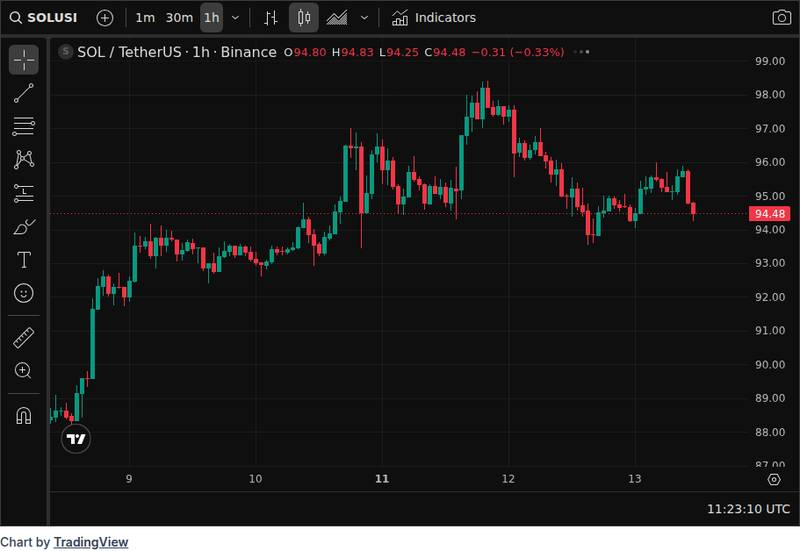
SOL currently trades near $94.39, above the March 31 valuations Upexi used. If prices hold, the company could report partial reversal of those unrealized losses in the next quarter, though that outcome depends entirely on where SOL sits at the next reporting date.
On the May 12, 2026 earnings call, Upexi’s CFO noted the company had approximately $3.5 million in cash and about 2.5 million Solana tokens at quarter end. The slight discrepancy with the 10-Q’s 2.36 million figure likely reflects rounding in verbal remarks versus precise filing data.
Why the Mark-to-Market Model Amplifies Quarterly Swings
Before ASU 2023-08 took effect, companies could carry crypto at cost minus impairment, a one-way ratchet that only recognized losses. The new fair-value standard cuts both ways: prices rise, gains appear; prices fall, losses hit the income statement. For a company like Upexi with a concentrated SOL position worth nearly $185 million, even modest price swings can produce headline losses that dwarf operating results.
This dynamic has drawn increasing attention as more public companies build crypto treasuries. Recent legislative activity around crypto regulation could eventually reshape how corporate digital asset holdings are treated, though no imminent rule changes are on the table.
The broader crypto market reflects cautious sentiment. The Fear & Greed Index sits at 42, firmly in “Fear” territory, suggesting risk appetite remains subdued across the sector. That backdrop adds context to why Upexi’s SOL position lost value during the quarter and why Solana ecosystem players have faced headwinds in recent months.
What Investors Should Watch Next
Management offered forward-looking guidance in the official earnings press release, estimating that by July 1, 2026, ongoing cash expenses for operations and interest will fall below treasury staking revenue at the current price of Solana. That projection remains unconfirmed guidance, not a verified result.
The key variable is SOL’s price at June 30, 2026, the end of Upexi’s fiscal fourth quarter. A recovery above the $83 level used for Q3 liquid token valuations would generate unrealized gains under the same accounting rules that produced this quarter’s loss. A further decline would deepen the paper losses.
With nearly its entire balance sheet tied to a single digital asset, Upexi has effectively become a leveraged bet on Solana’s price. The volatility risks inherent in concentrated crypto positions are now playing out in real earnings reports, giving investors a clear view of what mark-to-market crypto accounting looks like in practice.
Disclaimer: This article is for informational purposes only and does not constitute financial or investment advice. Cryptocurrency and digital asset markets carry significant risk. Always do your own research before making decisions.