



Protect Bitcoin inscriptions by separating cardinal and ordinal UTXOs, using coin control, checking outputs, and preventing accidental inscription spends
Bitcoin Ordinals remain safe only when their inscription-bearing UTXOs are identified, labeled, frozen from ordinary spending, and transferred with asset-aware input selection. A valid Bitcoin transaction can still destroy the intended ownership structure by spending the correct keys with the wrong output.
Separate collectible and payment wallets, inspect every outpoint before signing, and retain enough BTC in clean UTXOs to pay fees without touching the asset output. Hardware signing protects the key but does not replace sat selection, transaction preview, or a verified destination.
An inscription is tied to a specific UTXO
The community discussion behind this risk is less about a failed confirmation than about user control: participants explain that an inscription-bearing UTXO is a collection of sats, while another user admits not fully understanding the mechanics.
That evidence supports the article’s stronger safety rule. Bitcoin can confirm a transaction even when the wallet selected the wrong output, so the reader should identify the outpoint, inspect its contents, and verify the signing screen before sending ordinary BTC.
UTXO, satpoint, and postage identify different parts of the asset
An outpoint identifies an output as transaction ID:output index, such as abc...123:2. A satpoint adds the sat’s offset, producing abc...123:2:0 when the inscription sits first. The wallet must preserve both when constructing the next transaction.
Postage is the ordinary BTC value carried with the inscription output. It is not the inscription’s market value and it is not a separate wallet balance. If transaction construction assigns too little value to the destination or places the inscribed sat on the wrong output, the sat can follow change or be consumed as miner fee despite a valid signature.
Xverse’s Ordinals explainer notes that inscriptions use Bitcoin’s UTXO set and can be tracked as individual sats. That is why a wallet needs an asset map in addition to the BTC total: the outpoint proves where the output is, the satpoint identifies the sat, and the output value supplies postage.
Ordinary Bitcoin spending can move an inscription
| Wallet action | What can go wrong | Safe review point | Stop when |
|---|---|---|---|
| Send ordinary BTC | The inscription-bearing output is selected as an input | Confirm every selected outpoint before signing | The wallet hides input identity |
| Consolidate small outputs | A protected asset is merged into a generic balance | Label asset UTXOs and exclude them | The wallet cannot freeze or exclude the output |
| Transfer an inscription | The wrong output or recipient receives the asset | Match asset, outpoint, destination, and fee | The preview shows only a total balance |
| Restore on another wallet | Asset metadata is missing even though BTC appears | Restore a watch-only view and compare outpoints | The wallet cannot identify the inscription UTXO |
Suppose a wallet receives three outputs: ordinary BTC, an inscription-bearing output, and a small change output. When the user sends a payment, a generic coin-selection algorithm may choose two inputs to meet the amount and fee. If the inscription-bearing input is selected, the resulting transaction may transfer the inscription to an unintended output or combine it with a payment that was never meant to contain it.
The error is easy to miss because the transaction can be valid, confirmed, and correctly signed. Bitcoin consensus checks authorization and value balance; it does not check the owner’s intention for a satoshi. A successful confirmation therefore proves settlement, not correct asset handling.
The right mental model is “BTC balance plus an asset map.” Before spending, identify which outputs are ordinary, which contain inscriptions, which contain runes, and which are reserved for future recovery. Only then choose inputs.
Wallet controls that prevent accidental spending
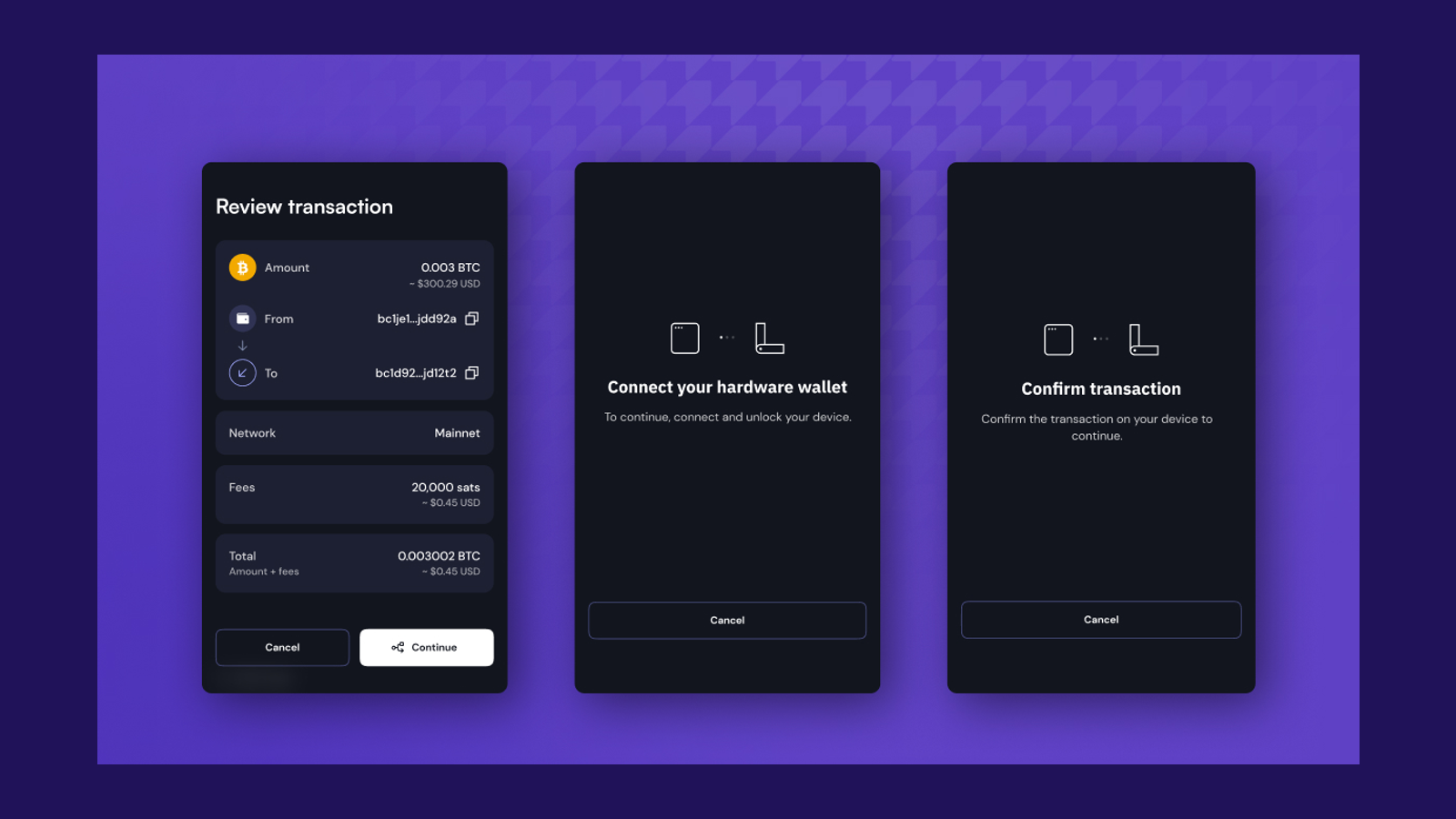
An Ordinals-capable wallet should expose a clear UTXO or sat-control view. Look for labels that identify inscription-bearing outputs, a way to freeze or reserve them, and a transaction preview that lists every input and output. If the interface only shows one total BTC balance, it is not enough for asset-sensitive spending.
The Ordinals wallet guide makes the same boundary clear: Bitcoin Core can provide the underlying wallet, but it does not automatically create inscriptions or perform sat control. A user who wants ord-style control must use the required wallet arrangement and understand which tool is responsible for selecting sats.
Use separate accounts or wallets for ordinary BTC and collectibles where possible. Separation reduces the number of transactions in which an asset-aware decision is required. It also makes recovery easier because the purpose of each wallet is explicit rather than encoded only in a label that may not survive migration.
For the key-management layer, compare this with the best Bitcoin hardware wallets and the Bitcoin hardware wallet backup workflow. If more than one signer controls the collection, the Bitcoin multisig wallet guide covers the authorization boundary, while this article covers the asset-bearing output.
Receive inscriptions without mixing UTXOs
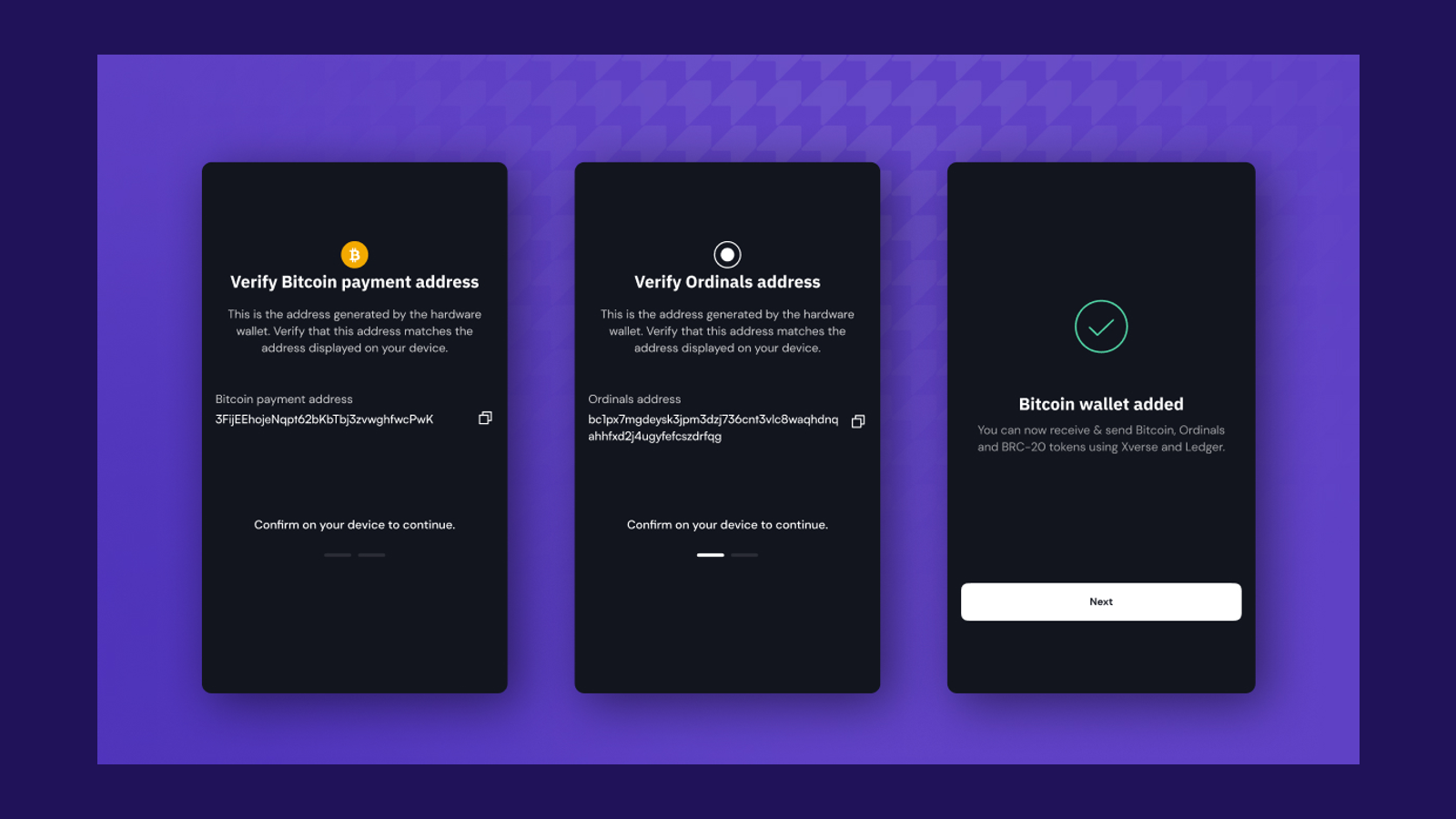
- Generate a receive address dedicated to the inscription and verify the complete address in the wallet and on the signing device. A browser can show the right collection while a compromised wallet extension changes the destination.
- Wait for confirmation, then confirm that the wallet identifies the incoming output as carrying the expected inscription. Do not consolidate it with ordinary BTC simply to make the balance look tidy.
- Record the transaction ID, receive address, output index, and wallet label. This inventory record helps locate the asset after restoration but must never contain seed words or private keys.
- Freeze or reserve the confirmed output before funding the wallet with spending BTC. The Bitcoin scam guidance also recommends checking the complete address rather than relying on its first or last characters.
Send ordinary BTC without touching inscriptions
For a normal payment, use this order:
- Freeze every inscription-bearing output before opening the send screen.
- Select only cardinal BTC inputs and confirm that their total covers the payment and fee.
- Inspect the destination and change output before signing.
- Verify after confirmation that every protected outpoint remains unspent.
If the wallet cannot freeze or manually select UTXOs, move ordinary BTC into a separate payment wallet before making the payment.
An address prefix is not an asset lock. A dedicated bc1p Ordinals address and a separate payment account can reduce mistakes, but Taproot alone does not stop wallet software from selecting its UTXO. Conversely, an inscription remains safe at another valid Bitcoin address while its containing output remains unspent and identifiable.
The fee can cause an unexpected input to be selected. A payment that appears affordable from the headline balance may still require an inscription output when the spendable ordinary outputs are too small. Keep a clean reserve of ordinary BTC for fees so the wallet does not reach into the collection.
After signing, save the transaction details and verify the confirmed outputs. Do not mark the asset as transferred merely because a transaction ID exists. Check that the intended output still contains the inscription and that no protected output was consumed by a routine payment.
This final check is different from a general Bitcoin transaction-fee review: the fee can be acceptable while the asset destination is wrong. Treat amount validation and inscription validation as two separate checks.
Transferring an inscription safely
An inscription transfer should be treated as an asset transaction, not as a generic BTC send. Select the exact inscription-bearing UTXO, use the intended destination, and confirm the output structure in an Ordinals-aware preview. Keep the fee input separate if the tool supports it, because mixing a collectible output with an ordinary payment makes review harder.
The destination should be tested before sending the valuable item. Confirm that the recipient uses a wallet that recognizes the relevant inscription format and that the address is not an exchange deposit address with unsupported asset behavior. A valid Bitcoin address is not automatically a suitable Ordinals custody destination.
Use a small-value rehearsal only when it genuinely tests the workflow. A rehearsal with an unrelated UTXO does not prove that the inscription will be preserved. The final transaction still needs a fresh review of the selected input, destination, change, and fee.
Hardware signing does not replace asset awareness
Hardware wallets are excellent at keeping private keys offline and displaying transaction details. They may not understand the economic meaning of an inscription, however. Some devices will show a valid Bitcoin transaction without identifying that one input contains a collectible satoshi.
The review must therefore happen at two layers. The wallet software checks the asset inventory and intended UTXO policy; the hardware device checks the address, amounts, and signing request. If those layers disagree, stop and inspect the transaction rather than treating the hardware approval screen as a complete safety guarantee.
For higher-value collections, keep a second watch-only record of addresses and UTXOs. A watch-only wallet cannot spend the asset, but it can help detect unexpected movement and preserve an independent view of the collection.
Recovery planning for Ordinals holders
A seed backup restores key authority, not necessarily the labels and inventory maintained by a particular Ordinals interface. Recovery may require the correct derivation path, wallet policy, address type, and a rescan of relevant transactions. The Bitcoin developer wallet guide is useful background for understanding how wallet software tracks keys and transactions.
Before an emergency, document the wallet type, derivation path, account purpose, software version, and protected transaction IDs. Store that operational record separately from the seed. Test restoration with a watch-only import or a spare environment, but never type the seed into an unknown website or browser form.
Do not assume that a marketplace account is a backup. The account may prove a purchase history while the inscription remains controlled by an on-chain key. Custody is determined by the signing authority and the output, not by a profile page.
Three UTXO mistakes that put inscriptions at risk
- Blind consolidation: Combining every small output can spend an inscription-bearing UTXO as ordinary BTC. Consolidate only after the wallet has separated collectible outputs from cardinal funds.
- Recovery in a generic Bitcoin wallet: The keys may return while the asset inventory remains invisible. An unrecognized inscription is still at risk if the replacement wallet later selects its UTXO.
- Trusting the gallery instead of the transaction: A screenshot can describe an asset, but only the transaction ID, output index, and current unspent status establish its on-chain position.
Five transaction checks before signing
- Confirm the wallet supports the exact asset protocol and exposes the carrying outpoint.
- Freeze inscription UTXOs and maintain separate cardinal BTC for network fees.
- Match every selected input against the asset inventory.
- Verify the full destination, asset output, change output, and fee.
- Review the same transaction on the hardware signer before approving it.
Input selection should remain inside an asset-aware wallet instead of relying on a general network-policy page. The address-reuse exposure becomes relevant when ordinary BTC and collectible-wallet histories are merged.
Inspect the complete input-output path
Read the transaction from the inputs outward. First identify the exact outpoint being spent, then check whether the wallet labels it as an inscription, rune, or ordinary BTC. Next inspect every output and determine which one is intended to receive the asset, which one is fee-related change, and which one is an ordinary payment. This is more reliable than judging from the total amount shown at the top of the screen.
Keep a dated record of the review for valuable transfers. The record can include the asset identifier, source outpoint, destination address, fee, and transaction ID after broadcast. It should never include private key material. That small amount of operational evidence makes it easier to diagnose a wallet display problem or verify that a recovery import found the expected output.
If the software uses unfamiliar terms such as sat ranges, envelopes, or asset locks, pause and consult the wallet’s current transaction documentation before signing. A glossary is not a substitute for an input and output preview, but it can reveal when a generic Bitcoin send screen is being used for an asset-sensitive transaction.
Worked example: protect an inscription while sending 0.006 BTC
Assume a wallet has 3 UTXOs: 0.030 BTC ordinary BTC, 0.004 BTC ordinary change, and a 10,000-sat output containing an inscription at satpoint abc...123:2:0. A 0.006 BTC payment should use only clean BTC inputs; selecting abc...123:2 would make a valid but asset-risky transaction. This is a calculated example, not a live wallet balance.
Pass criteria are: the protected outpoint remains unspent, the ordinary payment confirms, change returns to the intended payment account, and the asset inventory still resolves the inscription to the same satpoint. For an inscription transfer, review postage and destination output again instead of reusing this ordinary-payment test.
Conclusion
Ordinals safety starts with knowing which UTXO carries the asset and excluding it from unrelated spending. Fee efficiency is secondary when a transaction can permanently mis-send or consume the wrong output.
Frequently asked questions
Can an inscription disappear without a failed transaction?
Yes. A transaction can be valid and confirmed while spending the UTXO that carried the inscription. The problem is not a failed signature; it is an unintended asset transfer or destruction caused by selecting the wrong input.
Is every small Bitcoin UTXO an Ordinals asset?
No. Size and value do not identify an inscription. Use the transaction history and an Ordinals-aware wallet view to determine whether a particular output carries an inscription.
Can a hardware wallet protect an inscription automatically?
Not necessarily. It protects signing keys, but asset-aware UTXO selection usually happens in the companion wallet. Review the selected input and output policy before approving the transaction.
Should I combine inscription UTXOs to reduce wallet clutter?
Only when the wallet explicitly supports the relevant asset rules and you understand the resulting output. A generic consolidation is not a safe cleanup method for a collectible.
Disclaimer: This article is for informational purposes only and does not constitute financial or investment advice. Cryptocurrency and digital asset markets carry significant risk. Always do your own research before making decisions.
