



Recover a Lightning wallet after phone or node loss by matching the seed, channel backup, node credentials, or account recovery path to the wallet model.
Recovering a Lightning wallet after losing a phone or node depends on where its keys and channel state were stored. A seed may restore on-chain addresses while leaving active channels, inbound liquidity, a remote-node connection, or a provider account unresolved, so identify the wallet model before reinstalling software or importing recovery material.
Use only the wallet’s supported recovery path. Restore the seed, channel backup, emergency kit, remote-node credentials, or provider account as appropriate; then reconcile the on-chain and Lightning balances. Recovery is complete only when the funds can be spent or moved to a fresh wallet, not when an app merely displays a familiar balance.
Identify the wallet’s recovery model before restoring it
The published Lightning wallet comparison separates wallets by custody and operating model. That distinction becomes critical during recovery because an embedded mobile node, a remote-node controller, a swap-based wallet, and a custodial account do not restore from the same artifact.
A self-custodial seed controls keys but may not reproduce the latest channel state by itself. A static channel backup can help a node recover funds by asking peers to close channels, but it is not a live copy of the channel database. A remote controller may hold no funds locally because the keys and channels remain on the home node. A custodial account depends on the provider’s access and withdrawal process rather than a user-controlled seed.
Bitcoin Optech’s static-channel-backup summary clarifies that an SCB is updated when channels open or close and asks the remote peer to close with its latest state. It does not recreate the old channel as an active channel, and it cannot resolve the current state if both sides lost their records or the peer is permanently unavailable.
| Wallet model | Recovery artifact | Required recovery result | Main unresolved risk |
|---|---|---|---|
| Mobile wallet with managed liquidity | Seed plus wallet-specific recovery state | Balance reappears and can exit | LSP availability and recovery rules |
| Embedded mobile node | Seed and channel backup | Peers can help recover channel funds | Stale or missing channel state |
| Remote-node controller | Node backup and connection credentials | The node remains reachable and spendable | Node database or endpoint failure |
| Swap-based payment wallet | Wallet recovery kit | On-chain keys and swap path remain usable | Service and swap dependency |
| Custodial Lightning account | Provider account recovery | Access and withdrawal succeed | Provider freeze, outage, or loss |
Do not assume “seed backed up” means every balance will return immediately. Identify the model, recovery artifact, backup date, expected delay, and exit route. The distinction also affects cost: Lightning capacity and liquidity can change what is immediately spendable after a wallet returns online.
Preserve the remaining recovery evidence before reinstalling
Before deleting or reinstalling anything, preserve the wallet name, node identity, known on-chain addresses, channel peers, approximate balances, last successful payment, backup files, and provider account details. These are comparison points for the recovered state; none should include seed words or private credentials in an unprotected note.
Locate the recovery artifact created by the wallet’s own workflow. If it supplies a seed, keep the words offline and never type them into a website. If it created an emergency kit or channel backup, retain the exact file and identify which app and version produced it. Do not rename, edit, or upload these artifacts to an unfamiliar recovery service.
Recover Phoenix and other managed-liquidity wallets
Wallets such as Phoenix automate channel creation, splicing, and liquidity behind one mobile balance. Install the official app on a clean device, restore the seed through its recovery screen, allow the wallet to rescan, and identify whether funds return immediately or require a recovery transaction. Record any waiting period and fee before approving an exit.
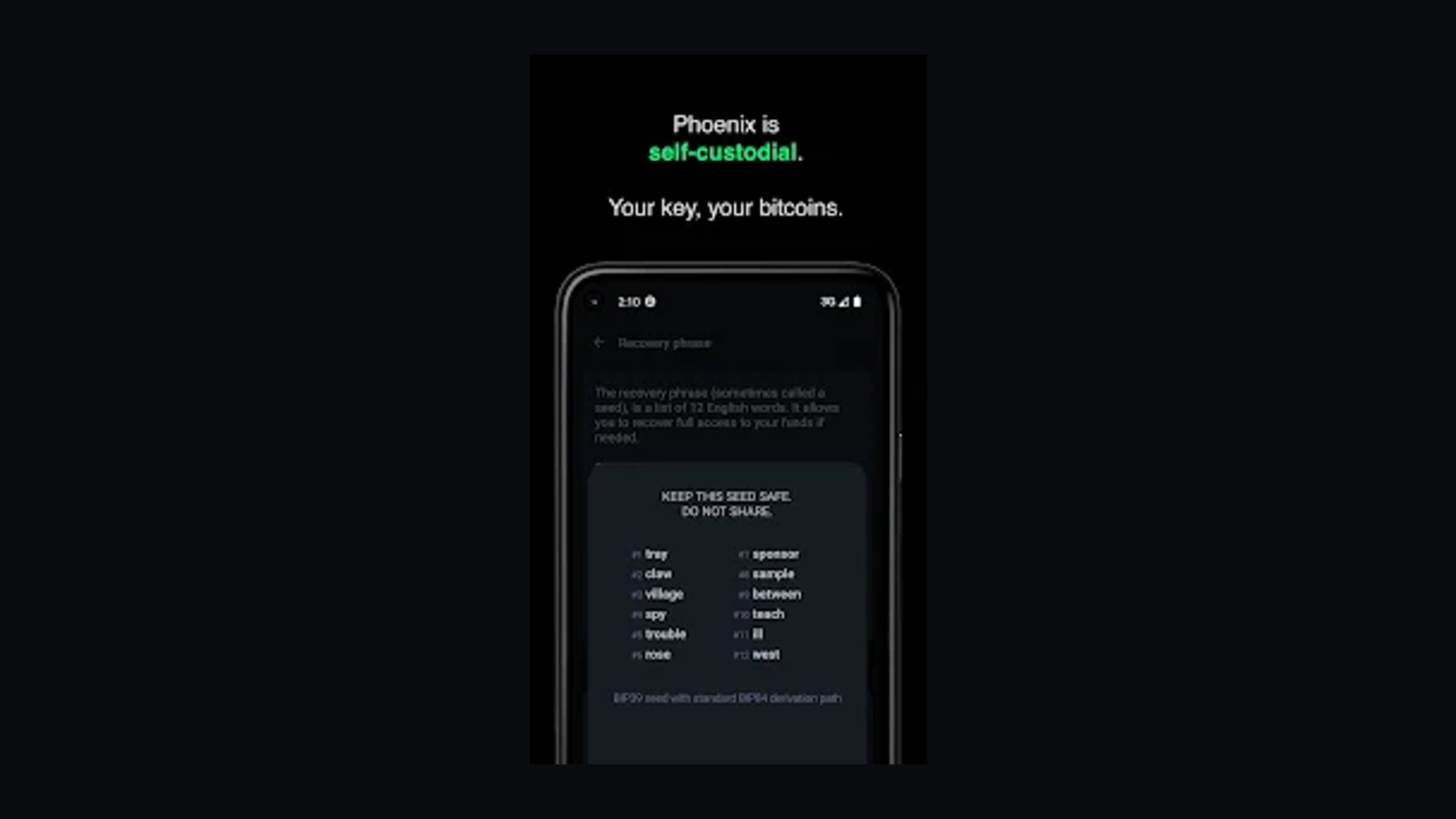
After restoration, compare the receiving address and payment history with the preserved record. Send a small Lightning payment or move a small amount on-chain before transferring the remainder. A wallet that displays the old balance but cannot create either payment has not restored spendable control.
The first receive after restoration can behave differently from later receives because new inbound capacity may be required. A first-time Phoenix receiver reported a quote of 1% plus mining fees and a 1,000-sat channel-creation charge in a September 2025 liquidity discussion. Fee schedules and mempool conditions change, so use the current preview rather than assuming the historical charge still applies.
Recover Breez and wallets that depend on an external LSP
An LSP-assisted wallet can keep signing authority with the user while relying on a service for channel and receiving operations. Restore the wallet through its supported process, confirm that the service recognizes the recovered state, and attempt a small outgoing payment before accepting new funds. Identify which recovery step depends on the LSP and which exit can be completed independently.
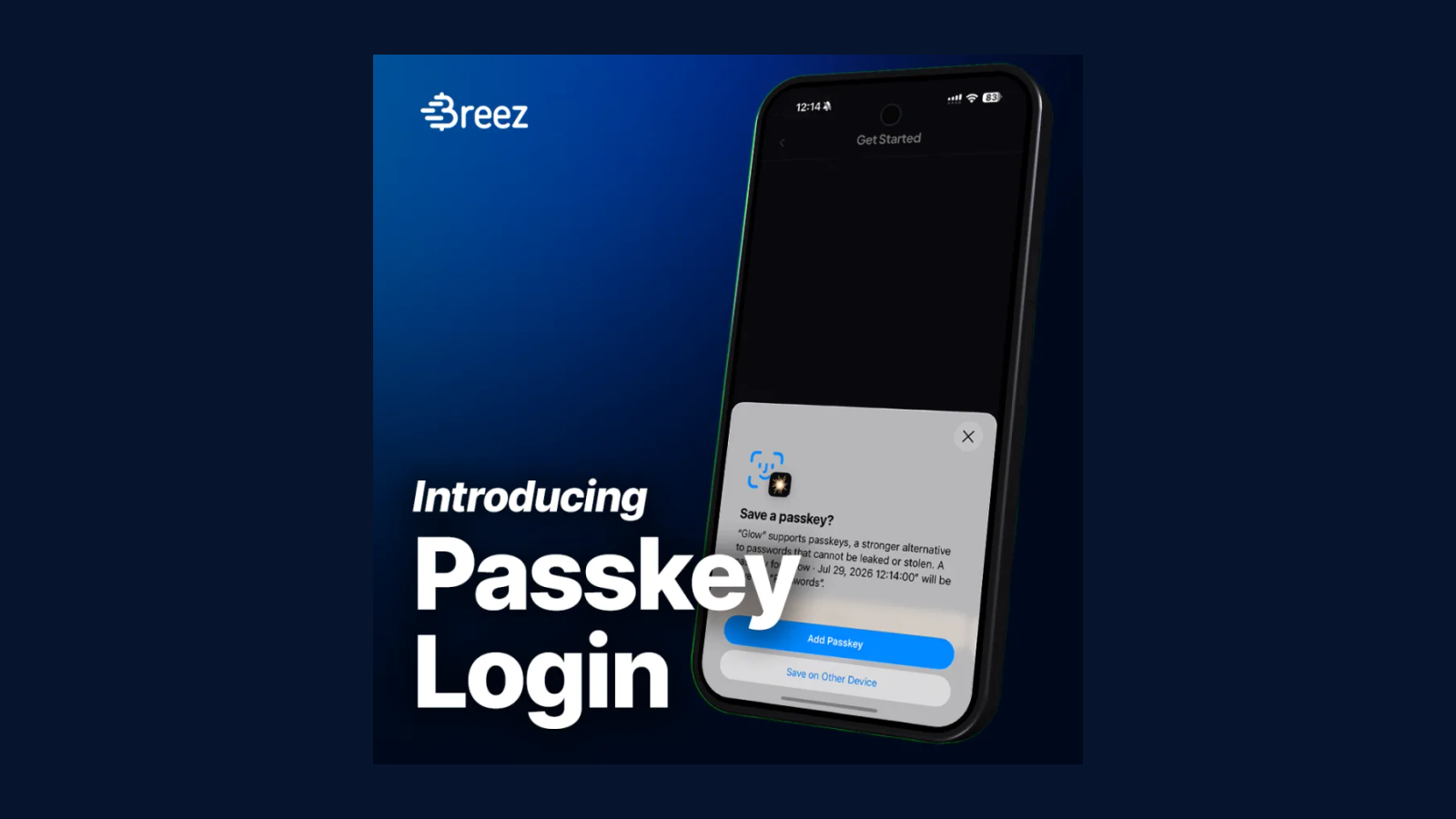
Backup visibility can become the first recovery obstacle. A Breez user with roughly 200,000 sats reported that the app said its backup had uploaded while the file was not visible in Google Drive in a September 2021 backup thread. The workflow may have changed since then, but the recovery action remains relevant: confirm that the restored app can locate the correct cloud backup before sending additional funds.
Record the provider, wallet version, recovery date, and export path. If the LSP fallback is unclear, keep only a routine spending balance and retain an on-chain withdrawal destination.
Reconnect ZEUS to the original Lightning node
A remote-node controller such as ZEUS may be only the interface. Losing the phone does not necessarily endanger funds when the node, keys, and channels remain on the server. Reinstall ZEUS on a clean device, then restore the node endpoint, certificate or macaroon, and network connection without changing the node database.
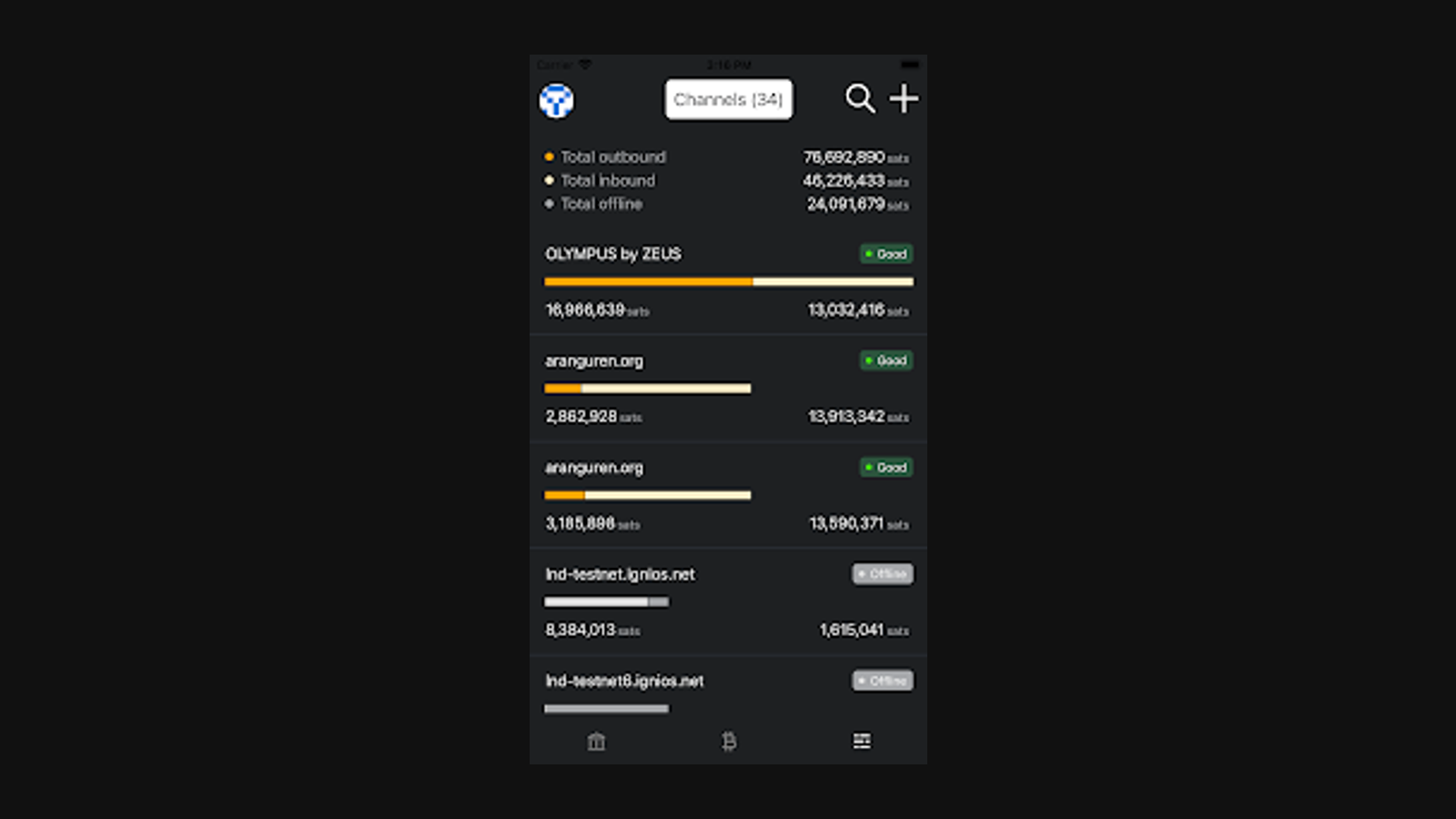
Verify the node identity, on-chain wallet, channel list, and latest transactions before sending. A successful connection to the wrong node is not recovery, so compare the node public key and at least one known channel peer with the records preserved before the phone was replaced.
If the node host was also lost, reinstalling ZEUS cannot restore it. Recover the node through the implementation-supported seed and channel-backup process, wait for the wallet and chain state to synchronize, and reconnect ZEUS only after confirming the recovered node identity. Never start two node instances from improvised copies of the same channel database because stale state can put channel funds at risk.
The distinction between controller and node has caused real balance confusion. In a May 2023 ZEUS and LNDHub recovery thread, an operator closed node channels but still saw a secondary-wallet balance in ZEUS; respondents clarified that ZEUS was displaying the remote account rather than holding an independent channel balance. Record the node identity and account type, then restore the node separately instead of treating the mobile screen as custody evidence.
Recover a Blixt embedded node and its channels
An embedded-node wallet gives the user more channel control, but its backup obligation is also heavier. In an August 2022 beginner-wallet comment, an experienced participant described Blixt as a full LND node on the phone and stressed that inbound capacity still had to be funded or supplied through its LSP. Recover the seed and the current channel backup together because reinstalling the application alone does not reconstruct the channel state.
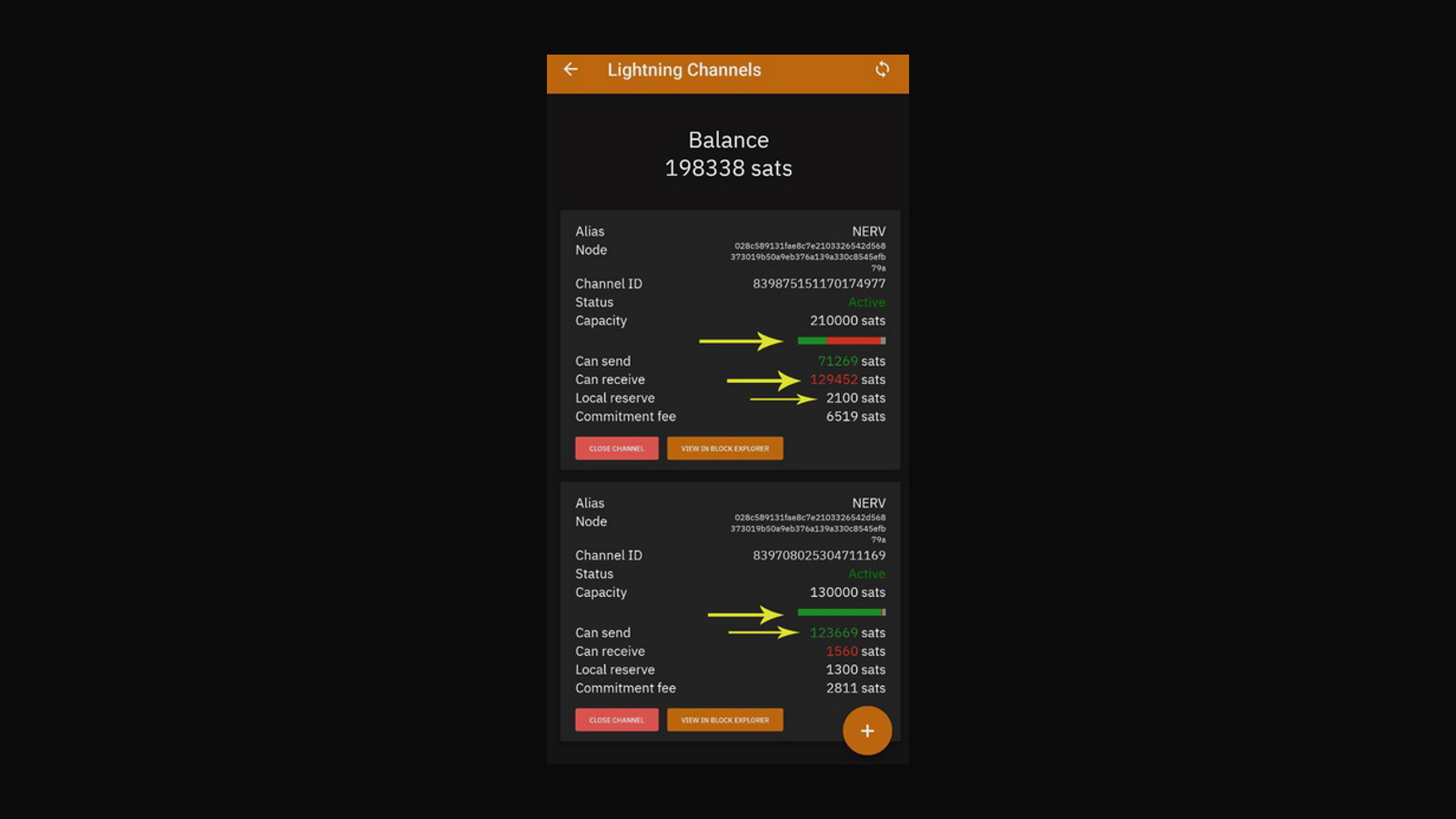
Restore Blixt on a clean replacement device through its supported recovery path. Verify the on-chain balance separately from channel recovery because those balances can become available at different times. If recovery force-closes channels, track the closing transaction, fee, and time lock until the outputs become spendable.
Reconciliation is complete when the recovered on-chain balance, channels, and pending outputs account for the amount held before the loss. Record peer dependencies and force-close delays rather than claiming that the seed provides an instant restore.
Recover Muun with its Emergency Kit
Muun presents one balance across on-chain and Lightning-compatible payments and provides an Emergency Kit rather than a conventional mobile-node channel backup. Use the kit through Muun’s supported recovery route, confirm which keys remain under the user’s control, and identify whether the emergency path creates an on-chain transaction rather than restoring Lightning liquidity in place.
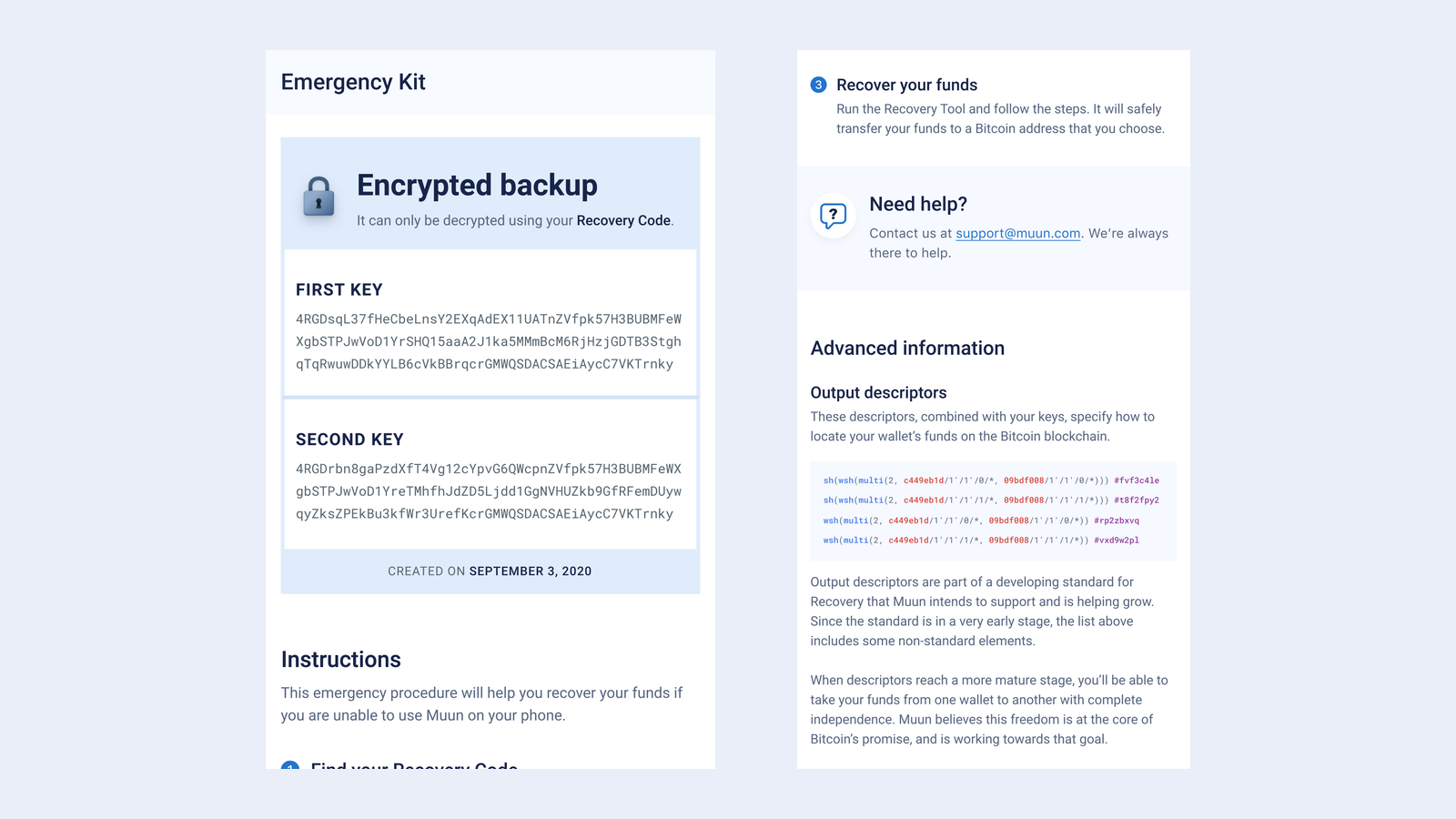
The recovery record should include the kit creation date and the supported restoration method, but not screenshots of secrets. Cost can materially change the amount ultimately recovered: a Muun user documented five successful and four failed payments totaling 65,310 sats in fees in a January 2024 payment record, with respondents pointing to submarine swaps. That historical snapshot does not establish current pricing, but it shows why the final amount must be reconciled after fees.
If a service participates in the normal payment path, follow the documented fallback rather than assuming the seed recreates every service-dependent function. The hardware wallet recovery guide applies the same principle: recovery is credible only when the intended user can restore control and move the funds.
Recover a Wallet of Satoshi custodial account
A custodial Lightning wallet does not give the user a seed that independently controls the balance. Recover Wallet of Satoshi through the registered email or account route, confirm that the service remains available in the user’s jurisdiction, and withdraw the recovered balance to a wallet the user controls. Logging back in is not enough when withdrawals are limited or subject to review.
Keep the amount within a defined spending limit because the provider controls keys, channels, and account access. A payment processor loss illustrates why account convenience and self-custodial recovery are different security claims.
Match the recovery action to the actual failure
| Actual loss | Recovery material to use | Expected result | Unsafe shortcut |
|---|---|---|---|
| Phone running a remote controller | Node endpoint, certificate or macaroon | Controller reconnects to the unchanged node | Treating an empty controller as a lost balance |
| Phone running an embedded node | Seed plus the wallet’s current channel backup | On-chain keys return and channels close through the supported process | Restoring only the seed and assuming channels are live |
| Node disk or host | Node seed, SCB, and implementation-specific recovery data | Peers close channels and outputs settle on-chain | Booting an arbitrary old channel database |
| Managed or swap-based mobile wallet | Wallet seed, cloud state, or emergency kit specified by that wallet | Wallet-specific balance and exit path return | Importing the seed into an unrelated Lightning app |
| Custodial account | Provider account credentials and withdrawal access | Account access returns and funds can be withdrawn | Assuming login equals self-custodial recovery |
During a service outage, use only the provider’s documented fallback or on-chain exit. Avoid changing network access, rotating credentials, and restoring channel state simultaneously because each additional change makes the failure harder to isolate. Record the incident, recovery action, elapsed time, fees, closing transactions, and final spendable balance.
Stop if instructions request a seed in a browser, two node instances might use the same state, the restored node identity differs, or the exit transaction is unclear. These are security failures covered by the broader Bitcoin wallet theft-threat guide, not prompts to continue with the main balance.
Build a one-page recovery card
The card should name the wallet model, custody owner, recovery artifact, backup location and date, expected delay, and emergency on-chain destination. Add the node identity for a remote node or the account-recovery route for a custodial wallet.
Keep secrets out of the card. It should identify where an authorized operator can find the protected seed or backup without reproducing it. Update the card after changing channels, nodes, providers, or phones, and review it annually.
Conclusion: recovery ends with a spendable balance
A Lightning wallet has recovered only when the operator can account for the balance and complete the appropriate exit. Seeds, channel backups, emergency kits, remote-node credentials, and provider accounts solve different failure modes; none should be described as universal Lightning recovery.
After recovery, make a small outgoing payment, reconcile the on-chain and channel balances, and move the remaining funds to a fresh wallet if compromise of the lost phone or node cannot be ruled out. Keep long-term savings outside the Lightning spending balance because recovery convenience does not remove hot-wallet risk.
Frequently asked questions
Does a Lightning seed restore open channels immediately?
Not necessarily. It may restore on-chain keys while channel recovery requires additional state, a static channel backup, peer-assisted closure, or a wallet-specific service.
Is a static channel backup a copy of the channel database?
No. It is generally used to help recover funds through channel closure rather than recreate a live node exactly as it was. Follow the wallet or node implementation’s supported process.
Can a Lightning wallet be recovered with only a seed phrase?
It depends on the wallet model. A seed may restore on-chain keys, while open channels can require a static channel backup, peer-assisted closure, or a wallet-specific recovery service before their value becomes spendable.
Does reinstalling ZEUS recover the Lightning node?
No. Reinstalling ZEUS restores controller access and reconnects to an existing node. Recovering a lost node requires its own seed, supported channel backup, node identity checks, and host restoration process.
Should a custodial Lightning wallet have a seed phrase?
Usually not for the custodial balance because the provider controls the keys. Recovery depends on the provider account, so balances should remain limited and regularly withdrawn.
Disclaimer: This article is for informational purposes only and does not constitute financial or investment advice. Cryptocurrency and digital asset markets carry significant risk. Always do your own research before making decisions.
